How to Cut Down a Tree Without Damaging Property
Table of Contents
- Introduction
- Understanding the Risks of Tree Removal
- Preparing the Area Before Cutting
- Tools and Equipment You Will Need
- Step-by-Step Guide on How to Cut a Down Tree
- Common Mistakes and What to Avoid
- When to Consider Professional Tree Removal
- Conclusion
- Book a Tree Removal Service
- Frequently Asked Questions
Key Takeaways
- Proper planning and site assessment reduce the risk of property damage.
- Using the correct tools and safety gear is essential for safe tree cutting.
- Understanding cutting techniques helps control the direction of the fall.
- Avoid common mistakes, including unsafe positioning and poor judgment.
- Professional support may be necessary for large or hazardous trees.
Introduction
Cutting down a tree without damaging property requires careful planning, proper tools, and controlled cutting techniques. The goal is to guide the tree safely to the ground while minimizing risks to nearby structures, landscaping, and people.
For homeowners and property owners in Cedar Falls, IA, understanding how to cut down a tree is important before attempting the task or hiring a service. Tree removal involves safety risks, especially in residential areas where homes, fences, and utilities are nearby. Learning the fundamentals can help you make informed, responsible decisions.
Understanding the Risks of Tree Removal
Tree removal is not just about cutting wood. It involves managing weight, direction, and environmental factors.
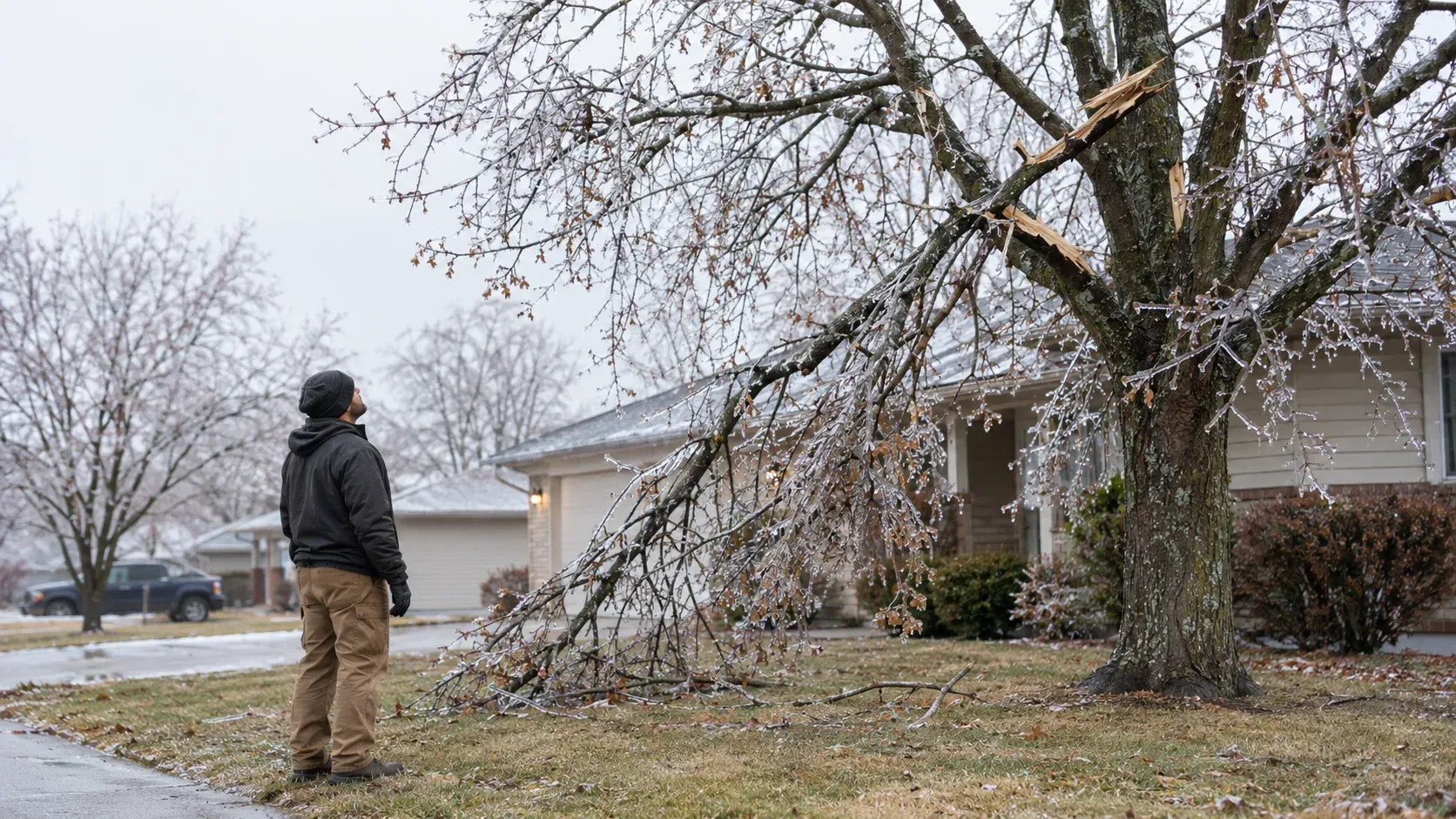
A falling tree can cause damage to roofs, vehicles, fences, and underground utilities. Even smaller trees can behave unpredictably due to wind, decay, or uneven weight distribution.
Key risk factors include:
- Tree height and lean direction
- Proximity to buildings or power lines
- Weather conditions such as wind or rain
- Tree health, including rot or internal damage
Recognizing these risks is the first step in reducing potential harm.
Preparing the Area Before Cutting
Preparation is essential when learning how to chop down a tree safely.
Start by clearing the surrounding area. Remove outdoor furniture, vehicles, and debris that could interfere with the process.
Next, identify a safe fall zone. This is the direction where you want the tree to land. Ideally, the fall zone should be clear of structures and obstacles.
Also consider:
- Escape routes: Plan at least two paths away from the falling tree
- Ground stability: Avoid working on uneven or slippery surfaces
- Weather conditions: Do not cut during strong winds or storms
Careful preparation helps reduce unexpected outcomes during the cut.
Tools and Equipment You Will Need
Using the right tools improves both safety and control.
Common tools include:
- Chainsaw with a sharp, well-maintained chain
- Safety helmet with face shield
- Protective gloves and steel-toe boots
- Hearing protection
- Wedges to guide the tree's fall
Each tool plays a role in ensuring the process is controlled and predictable. Improvised or poorly maintained equipment increases the risk of accidents.
Step-by-Step Guide on How to Cut a Down Tree
Understanding proper cutting techniques is key to directing the tree safely.
Step 1: Assess the Tree
Look at the natural lean of the tree. Trees often fall in the direction they are already leaning.
Check for damaged branches or weak areas that may break unexpectedly.
Step 2: Plan the Notch Cut
The notch cut determines the direction of the fall.
Cut a wedge-shaped notch on the side facing the desired fall direction. This notch should be about one-third of the tree's diameter.
Step 3: Make the Back Cut
The back cut is made on the opposite side of the notch.
Cut slightly above the base of the notch. This creates a hinge that helps guide the tree as it falls.
Step 4: Use Wedges if Needed
Insert wedges into the back cut to help control the fall direction, especially if the tree is not leaning naturally toward the intended area.
Step 5: Move to a Safe Distance
Once the tree begins to fall, move along your planned escape route. Never turn your back on the falling tree.
This structured approach improves control and reduces the chance of unintended damage.
Common Mistakes and What to Avoid
Understanding what not to do is just as important as knowing the correct process.
Never Do This When Cutting Down a Tree
- Do not cut without a clear escape path
- Do not stand directly behind the tree during the back cut
- Do not ignore the tree's natural lean
- Do not use dull or faulty equipment
- Do not work alone in high-risk situations
One of the most common mistakes is underestimating the complexity of tree removal. Even experienced individuals approach each tree with caution.
Avoid rushing the process. Taking shortcuts often increases the likelihood of property damage or personal injury.
When to Consider Professional Tree Removal
Some situations require professional expertise.
You may need assistance if:
- The tree is close to structures or power lines
- The tree is large or unusually shaped
- There is visible rot or instability
- You lack proper tools or experience
Professionals are trained to handle complex removals using specialized equipment and techniques.
For property owners in Cedar Falls, IA, reviewing services like those offered by Fowlkes Tree And Stump Removal can provide insight into safe and regulated practices.
Conclusion
Cutting down a tree without damaging property involves more than just making cuts. It requires planning, proper equipment, and an understanding of how trees behave when they fall.
By preparing the area, using correct techniques, and avoiding common mistakes, property owners can reduce risks and improve safety. In more complex situations, seeking professional support may be the most responsible option.
Informed decision-making helps protect both property and personal safety.
Book a Tree Removal Service
If you are considering tree removal and want clear, practical guidance, you can explore professional support for your situation. Send us an email at fowlkestreeandstumpremoval@gmail.com or call us at (319) 327-1199 to learn more about our tree services.
Frequently Asked Questions
How do we know which direction a tree will fall?
We assess the natural lean, branch weight, and wind direction. These factors influence how the tree is likely to fall.
Can we cut a tree close to our house safely?
We can in some cases, but it requires careful planning and may involve higher risks. Professional help is often considered.
What tools do we need for cutting down a tree?
We typically use a chainsaw, safety gear, and wedges to guide the fall and improve control.
What is the biggest mistake when cutting down a tree?
One major mistake is ignoring the tree’s natural lean or failing to plan a proper escape route.
When should we avoid cutting a tree ourselves?
We avoid it when the tree is large, unstable, or near structures, as these conditions increase risk.
Related Posts