Can Pruning Fruit Trees Improve Their Harvest in Hudson, IA?
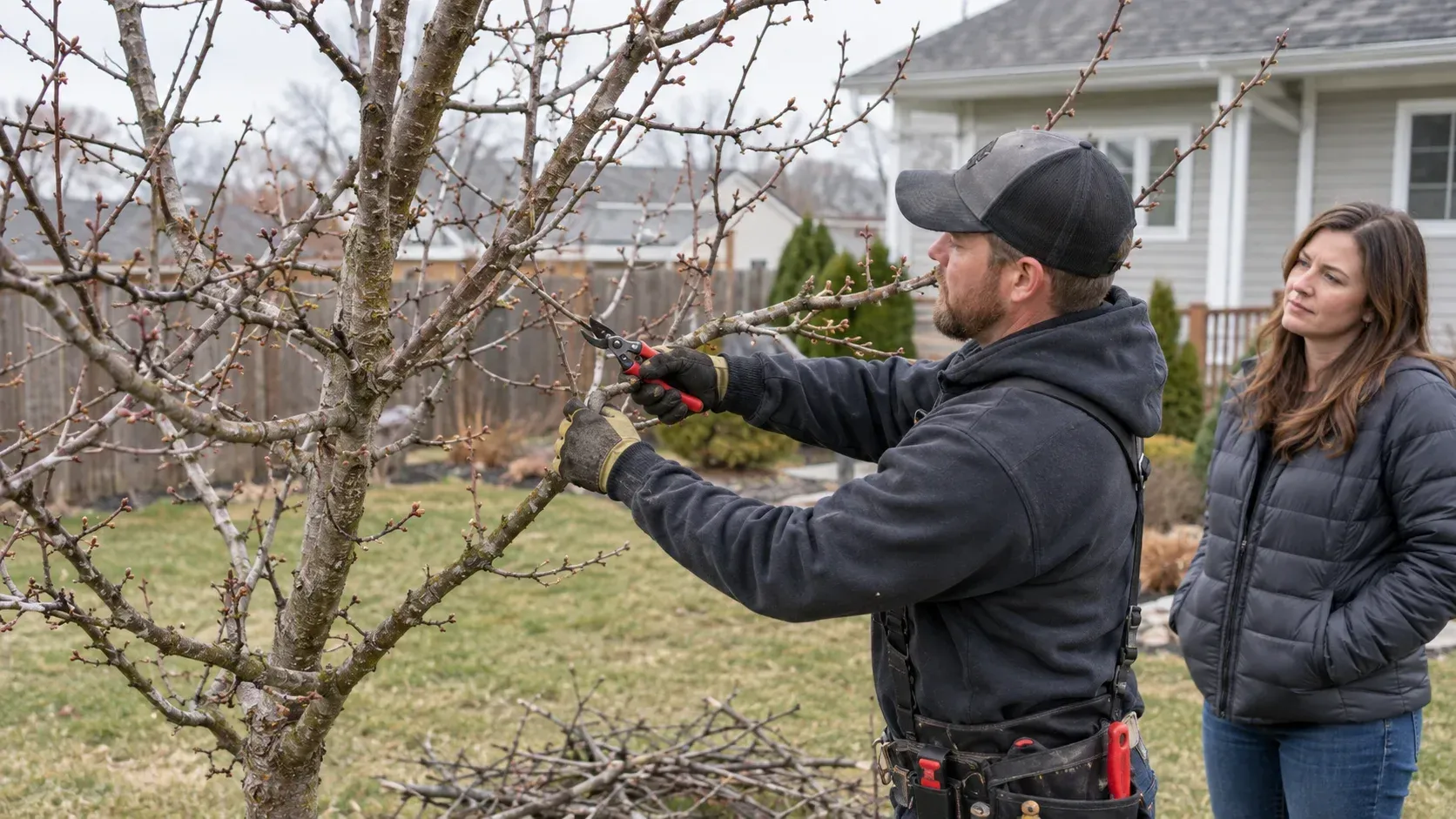
Table of Contents
- Can Pruning Fruit Trees Improve the Harvest?
- How Pruning Affects Fruit Production
- The Best Time to Prune Fruit Trees
- Pruning Techniques That Support a Better Harvest
- A Practical Framework for Pruning Fruit Trees
- Common Misunderstandings About Fruit Tree Pruning
- A Realistic Example of Pruning for Harvest
- What Typical Pruning Advice Overlooks
- Risks, Limitations, and When to Get Help
Key Takeaways
- Pruning fruit trees can support better fruit quality and tree health, though it does not guarantee a larger harvest on its own.
- Good pruning improves light penetration and air circulation, which helps fruit ripen and lowers the risk of some diseases.
- The late dormant season, roughly late winter to early spring in Iowa, is the main window for pruning most fruit trees.
- Over-pruning can backfire by triggering excess leafy growth and reducing fruiting, so restraint matters.
- Different fruit trees are trained in different shapes, so the right approach depends on the species and the tree's age.
Introduction
Pruning fruit trees can improve the quality and consistency of a harvest, but it is a supporting factor rather than a guarantee of more fruit. Done well, pruning lets more light reach the fruiting wood, improves airflow, and directs the tree's energy, which tends to produce healthier, better-sized fruit over time. If you would rather have a professional handle it, our team offers tree service in Hudson and the surrounding Iowa area, and fruit tree questions are common among both homeowners and property owners here.
This matters because many people either skip pruning entirely or cut too aggressively, and both choices can hurt a tree's productivity. Whether you tend a few backyard apples or manage several trees on a commercial property, understanding how and when to prune helps you work with the tree rather than against it. The sections below explain how pruning affects fruiting, when to do it, which techniques help, and where the common mistakes happen.
Can Pruning Fruit Trees Improve the Harvest?
Direct answer: Pruning fruit trees can improve harvest quality and support steadier production, but it works alongside factors like sunlight, water, soil, pollination, and weather rather than guaranteeing a bigger crop by itself.
The reason pruning helps comes down to how fruit trees use light and energy. Fruit develops best on wood that gets good sun exposure, and an overgrown, crowded canopy shades its own interior. Opening up the canopy lets light reach more of the fruiting wood.
Pruning also guides where the tree spends its energy. By removing dead, weak, or poorly placed branches, you help the tree put resources into healthy, productive growth instead of unproductive wood. That said, a tree's output still depends heavily on conditions you do not fully control, which is why pruning is best seen as one tool among several.
How Pruning Affects Fruit Production
Pruning influences a fruit tree in a few connected ways, and understanding them makes the technique less of a guessing game.
Light and Air Movement
A well-pruned tree has an open structure that lets sunlight filter through the canopy. More light on the fruiting wood supports ripening and can improve fruit size and color.
Better airflow is the companion benefit. Air moving freely through the canopy helps foliage dry after rain or dew, which can reduce the conditions that some fungal diseases favor.
Energy and Growth Balance
Every cut sends a signal to the tree. Removing excess wood helps balance leafy growth against fruit production, so the tree is not spending all its energy on foliage.
This balance is easy to tip too far. Heavy pruning can push a tree toward vigorous leafy regrowth, including water sprouts, at the expense of fruit, which is why moderation is a recurring theme in fruit tree care.
The Best Time to Prune Fruit Trees
Direct answer: For most fruit trees in Iowa, the late dormant season, roughly late winter to early spring before buds open, is the main pruning window.
Dormant pruning has clear advantages. With the leaves gone, the branch structure is easy to see, and cuts made before the spring flush tend to close well as growth resumes. The tree is also not actively using stored energy, so it loses less from each cut.
When Summer Pruning Helps
Summer pruning has its place, usually for managing size and vigor rather than major structural work. Light summer cuts can slow an overly vigorous tree and let more light into the canopy as fruit develops.
Timing to Approach With Caution
Fall is generally a poor time for significant pruning. Wounds close more slowly going into winter, and some disease organisms are active in autumn, which raises the risk at cut sites. Dead or clearly hazardous wood, however, can be removed at any time of year.
Pruning Techniques That Support a Better Harvest
Technique matters as much as timing. A few core practices apply across most fruit trees, carried out through professional tree pruning or careful home work.
Remove the Problem Wood First
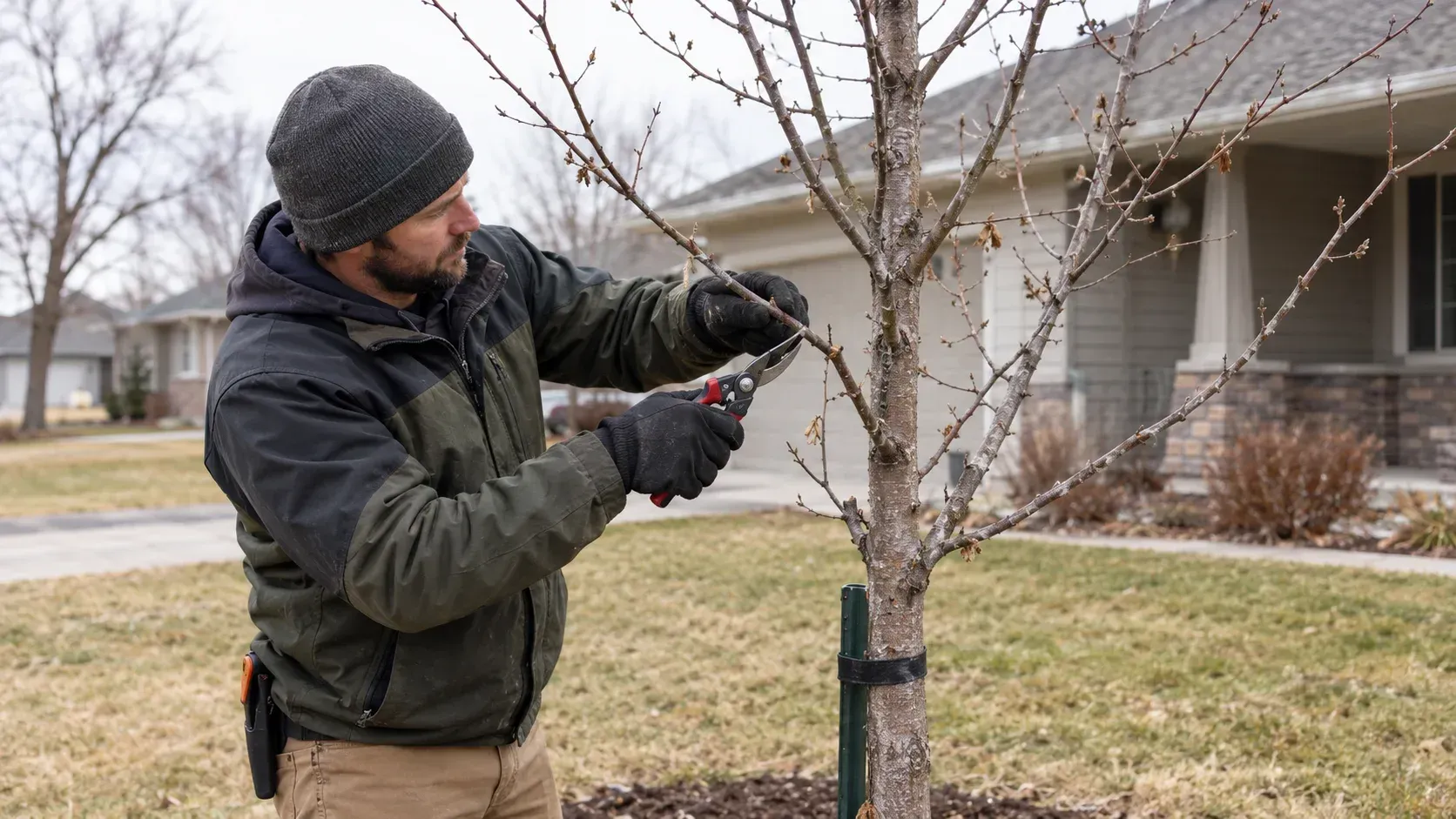
Start by taking out the "three Ds": dead, diseased, and damaged wood. These branches do not produce and can spread problems, so clearing them is a safe first step.
Next, remove branches that cross or rub against each other, since the wounds they create invite decay. Suckers at the base and water sprouts shooting straight up are also usually removed, as they rarely bear good fruit.
Shape for Light and Structure
Beyond cleanup, pruning shapes the tree so light reaches the fruiting wood. Thinning cuts, which remove a branch back to its origin, open the canopy without triggering as much regrowth as heading cuts.
Different fruit trees are trained into different forms. Apples and pears are often grown with a central leader, while peaches, plums, and cherries are commonly trained to an open-center or vase shape that lets light into the middle.
A Practical Framework for Pruning Fruit Trees
Working through pruning in a set order helps avoid both timidity and over-cutting. The steps below offer a practical sequence.
- Pick the right time. For most structural pruning, wait for the late dormant season. Remove hazardous or dead wood whenever you spot it.
- Clear the problem wood. Take out dead, diseased, damaged, crossing, and rubbing branches first.
- Remove suckers and water sprouts. These rarely produce good fruit and draw energy away from productive wood.
- Open the canopy. Use thinning cuts to let light into the center, keeping the tree's natural training form in mind.
- Step back often. Prune gradually, checking the shape as you go, and avoid removing a large share of the canopy in one season.
- Match the approach to the species and age. Young trees need formative pruning, while mature trees need maintenance, and training forms vary by fruit type.
This sequence will not fit every tree perfectly, but it keeps the work organized and reduces the chance of over-pruning.
Common Misunderstandings About Fruit Tree Pruning
Several widespread beliefs about pruning fruit trees can lead to disappointing results. Clearing them up supports better decisions.
Belief: The more you prune, the more fruit you get. What is actually true: Heavy pruning often stimulates leafy regrowth and water sprouts rather than fruit. Moderate, well-placed cuts tend to serve production better. Why it matters: over-pruning can reduce the very harvest you hoped to improve.
Belief: Pruning guarantees a bigger crop. What is actually true: Pruning supports fruit quality and tree health, but weather, pollination, soil, and water all shape the final harvest. Why it matters: treating pruning as a guarantee sets up unrealistic expectations.
Belief: Any time of year is fine to prune fruit trees. What is actually true: Timing affects how wounds close and how disease responds, and fall pruning in particular carries added risk. Why it matters: the same cut can behave differently depending on the season.
A Realistic Example of Pruning for Harvest
The following is a hypothetical example, offered to show how the approach plays out, not an account of a specific customer.
Imagine a property owner in Hudson, IA has an older apple tree that has grown dense and tall, with fruit mostly high up and small. The interior is shaded, and several branches cross through the middle.
Rather than cutting it all back at once, they plan a staged approach over two dormant seasons. In the first winter, they remove dead and crossing branches and take out a few larger limbs to open the center to light.
The next season, they continue thinning and manage any water sprouts that appeared. Over time, more light reaches the lower and interior wood, and the fruit becomes easier to reach. This gradual method avoids the stress and excess regrowth that a single heavy pruning can cause.
What Typical Pruning Advice Overlooks
Most quick pruning guides focus on where to cut. In practice, several less-obvious factors shape the result just as much.
One is patience across seasons. Restoring an overgrown fruit tree is rarely a one-winter job, and trying to fix it all at once usually backfires with a flush of unproductive growth. Staged pruning over a few years is often the sounder route.
Another is the rest of the tree's care. Pruning cannot compensate for poor soil, inconsistent water, pest pressure, or a lack of pollination partners. A beautifully pruned tree in poor growing conditions will still underperform.
Scale and safety are also underplayed. For a single small backyard tree, careful home pruning is reasonable. For tall, mature trees or multiple trees on a larger or commercial property, the work gets harder and riskier, and bringing in help is often the practical choice. In rare cases where a fruit tree is in serious decline or poses a hazard, tree removal and replanting may make more sense than ongoing correction.
Risks, Limitations, and When to Get Help
Pruning carries both practical limits and real hazards. Cutting too much, cutting at the wrong time, or making poor cuts can set a tree back rather than help it, so restraint and good technique matter.
There are limits to what pruning can achieve. It can improve light, airflow, structure, and fruit quality, but it cannot override weather, a poor site, or a tree that is already in decline. Results also vary by species, age, and prior care, so general guidance only goes so far.
Safety is the other consideration. Working at height, using ladders, and handling larger limbs introduce risk, especially on tall or mature trees. For bigger jobs, or when a tree's health is in question, an experienced assessment is a reliable way to get good results without putting yourself at risk. A tree on a busy property in Hudson, IA, for instance, deserves a careful, in-person look before major cuts.
Conclusion
Pruning fruit trees can meaningfully support a better harvest by improving light, airflow, and the balance between leafy growth and fruit, but it is one factor among several rather than a guarantee of more fruit. The late dormant season is the main pruning window in Iowa, and moderate, well-placed cuts generally serve production better than heavy cutting.
The steadiest results come from matching your approach to the species and age of the tree, working gradually across seasons, and pairing good pruning with sound overall care. Because technique, timing, and safety all affect the outcome, weighing these factors with a clear plan, and getting help for larger jobs, is what supports a healthy, productive tree.
Thinking About Pruning Your Fruit Trees in Hudson, IA?
If you want help deciding how and when to prune your fruit trees, or you have a larger or overgrown tree that feels like too much to tackle alone, it can help to talk it through with someone who can see the tree. You are welcome to
reach out to our team with your questions or to arrange an assessment of your property in the Hudson, IA area. There is no pressure and no obligation, just clear guidance to help you make an informed decision.
Frequently Asked Questions
Does pruning fruit trees really improve the harvest?
It can support better fruit quality and steadier production by improving light and airflow, but it does not guarantee a larger crop. Weather, soil, water, and pollination also play major roles in the final harvest.
When is the best time to prune fruit trees in Iowa?
The late dormant season, roughly late winter to early spring before buds open, is the main window for most fruit trees. Dead or hazardous wood can be removed at any time of year.
Can I prune my fruit trees too much?
Yes. Heavy pruning can trigger excess leafy growth and water sprouts rather than fruit. Moderate, well-placed cuts and a gradual approach across seasons usually serve production better.
Should different fruit trees be pruned differently?
Yes. Apples and pears are often trained with a central leader, while peaches, plums, and cherries are commonly grown in an open-center shape. The tree's age also affects the approach.
Do I need a professional to prune my fruit trees?
Small backyard trees can often be pruned carefully at home. For tall, mature trees, multiple trees, or trees whose health is uncertain, a professional can reduce both risk and guesswork.
Related Posts