How Do You Know If a Storm-Damaged Tree Is at Risk of Falling on Your Hudson, IA Home?
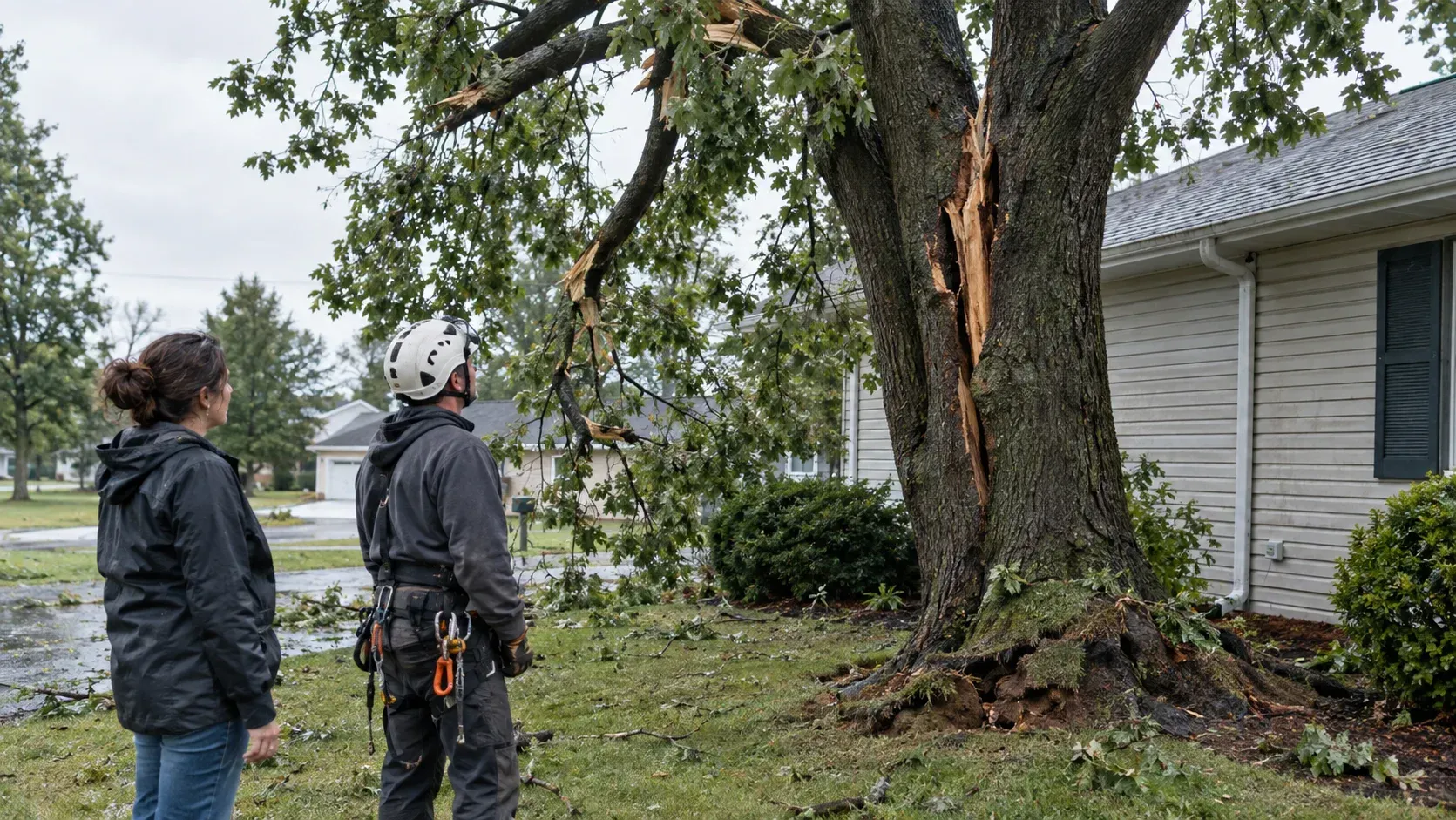
Table of Contents
- How Do You Know If a Storm-Damaged Tree Is at Risk?
- Visual Signs That Suggest a Tree Is Unstable
- Where to Look on the Tree
- How Lean and Root Movement Signal Risk
- A Practical Framework for Judging Risk
- Common Misunderstandings About Dangerous Trees
- A Realistic Example of Assessing Two Trees
- What Typical Advice Overlooks
- Risks, Limitations, and When to Call a Professional
Key Takeaways
- A storm-damaged tree is more likely to be a falling risk when it has a split trunk, a new or worsening lean, major root damage, or large broken limbs still attached.
- Cracks and splits near the trunk or main branch unions are more serious than damage out at the branch tips.
- A tree that shifted in the ground or lifted soil near its base after a storm may have compromised roots, even if the trunk looks fine.
- Not every damaged tree is dangerous, and not every leaning tree is new or unstable, so context from before the storm matters.
- When a tree threatens a home, driveway, or gathering area, a professional assessment is a reliable way to resolve the uncertainty.
Introduction
A storm-damaged tree is at higher risk of falling on your home when it shows a split or cracked trunk, a lean that is new or has gotten worse, visible root movement at the base, or large broken limbs still hanging in the canopy. Any one of these signs is worth taking seriously, and more than one together raises the concern further. If you want a professional opinion on a tree near your house, our team provides tree service in Hudson and the surrounding Iowa area, and storm damage assessments are a routine part of that work.
This matters because the difference between a tree that looks rough and a tree that is genuinely unstable is not always obvious. Many homeowners and business owners either worry over a tree that is actually fine or overlook one that has become a real hazard. The sections below walk through the specific signs to check, where on the tree they matter most, and how to put them together into a clearer picture of the risk.
How Do You Know If a Storm-Damaged Tree Is at Risk?
Direct answer: The clearest risk signs are a cracked or split trunk, a lean that is new or worsening, soil lifting or cracking around the base, and large hanging or broken limbs still in the tree. These point to structural failure rather than cosmetic damage.
Storms can damage a tree in ways that are easy to see and ways that are not. A missing branch or two is usually cosmetic. A crack running into the main trunk, by contrast, affects the structure that holds the whole tree up.
The location of damage matters as much as its size. Damage near the trunk or at major branch unions carries more weight than the same amount of damage out at the branch tips, because that is where the tree's load-bearing structure lives.
Visual Signs That Suggest a Tree Is Unstable
A careful look from a safe distance can reveal a lot. A few visual signs are worth specifically checking after a storm.
Cracks and Splits
A crack running along the trunk, especially one that opens or closes slightly as the tree moves in wind, suggests the wood fibers have separated. A split at a major branch union, where two large limbs meet, is a particularly strong warning sign.
Hanging or Broken Limbs
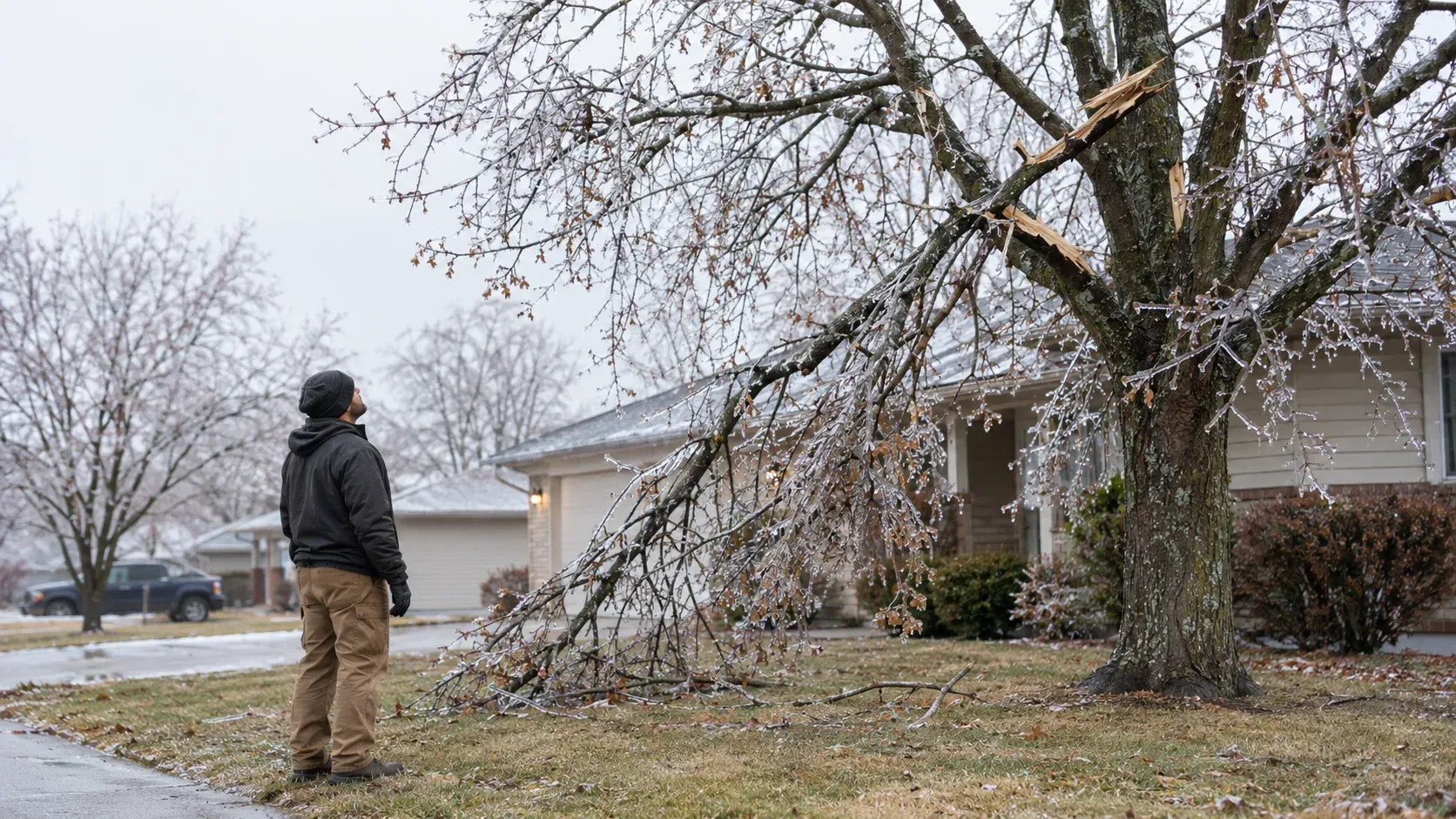
Large limbs that broke but did not fully detach are sometimes called hangers, and they can fall with little warning, especially in wind or under added ice or snow weight. These should be treated as an active hazard rather than something to watch.
Missing Bark or Exposed Wood
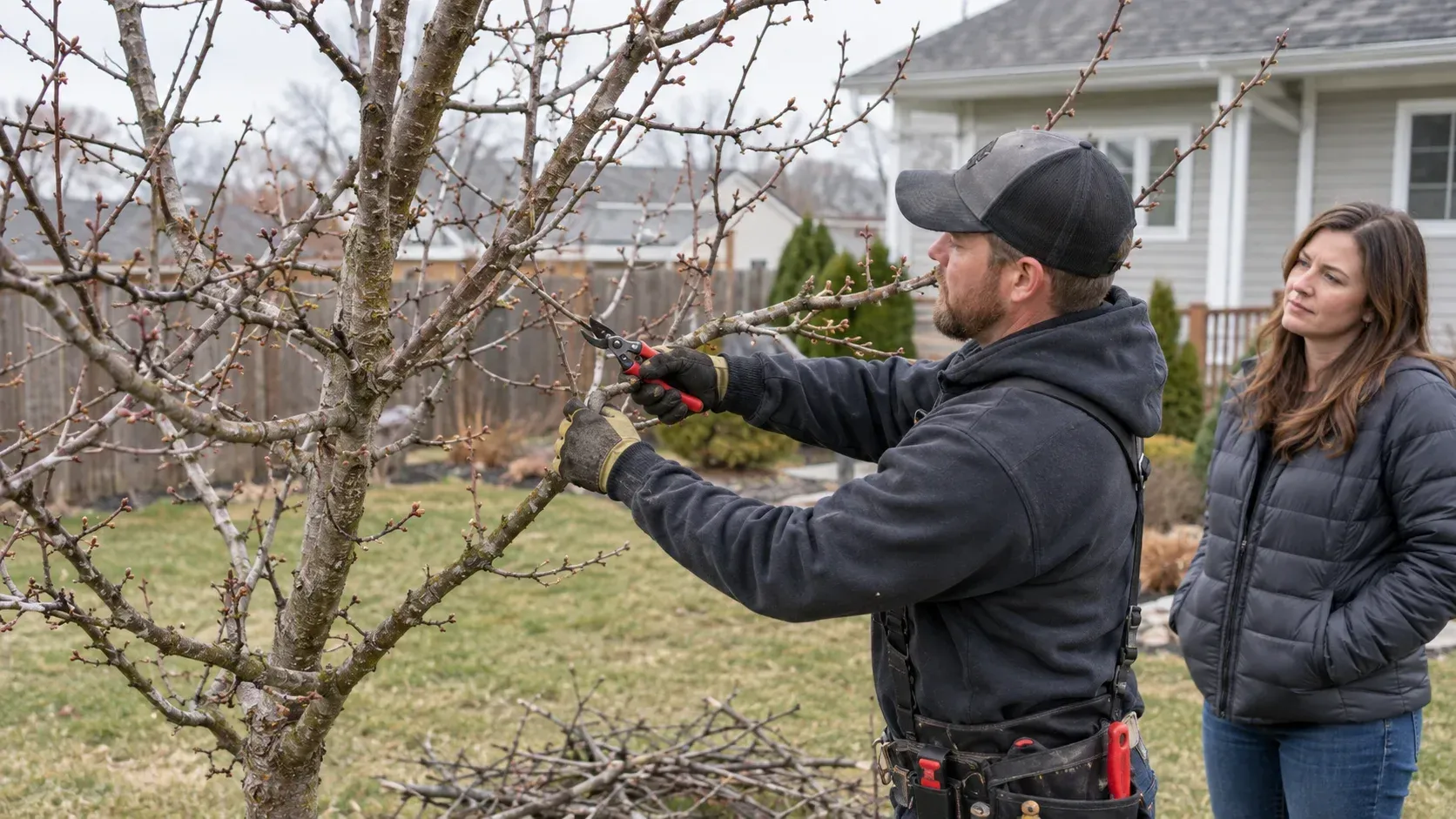
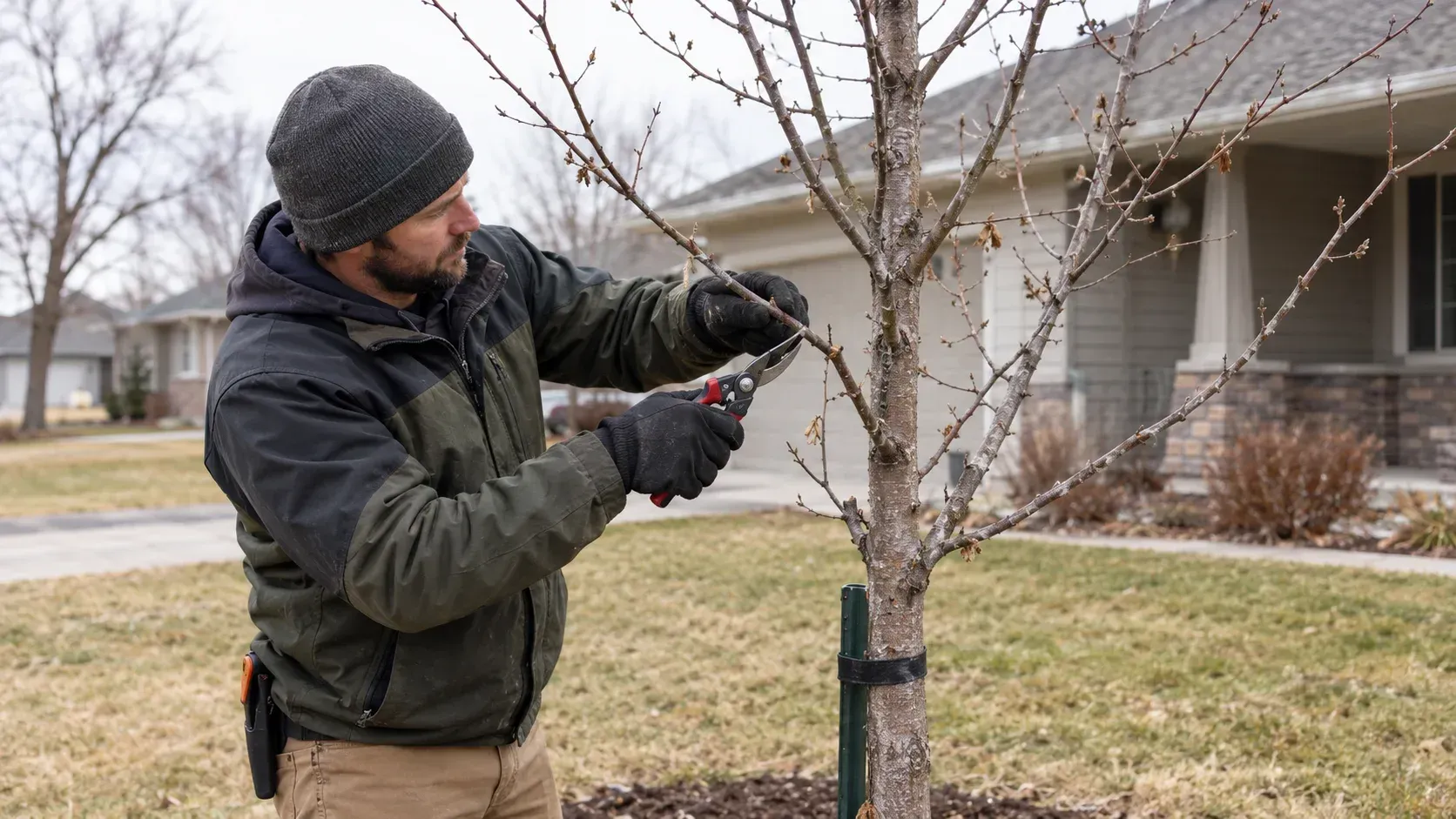
A large area of bark torn away, especially near the base or along the trunk, exposes the tree to decay and insects over time. This does not always mean immediate failure, but it is a point of ongoing weakness worth monitoring. When the damage is limited to a few branches rather than the trunk or roots, corrective pruning is often enough to clean up the tree and reduce further risk.
Where to Look on the Tree
Not all parts of the tree carry equal risk when damaged. Knowing where to focus your attention narrows down a confusing picture.
The Trunk and Main Unions
This is the single most important area. Cracks, splits, or significant bark loss here affect the structure supporting the entire canopy, and problems in this zone are the ones most likely to lead to a sudden failure.
The Base and Root Flare
Where the trunk meets the ground is another key area. Soil that has lifted, cracked, or separated from the trunk on one side is a sign the root system may have been disturbed, even if nothing looks wrong above ground.
The Upper Canopy
Damage higher in the tree, such as broken smaller branches or thinning leaves, is generally less urgent from a structural standpoint, though hanging material up high still poses a falling hazard and should not be ignored.
How Lean and Root Movement Signal Risk
Direct answer: A tree that is leaning more than it did before the storm, or that shows lifted or cracked soil near its base, may have root or anchoring damage that makes it more likely to fall, even without visible trunk damage.
Some trees have always grown with a slight natural lean, which is not necessarily dangerous on its own. What matters is change. A lean that appeared suddenly during or after a storm is a different situation from a long-standing lean that has remained constant for years.
Root movement is harder to spot but important. Look for soil mounding or cracking on one side of the base, or small gaps between the trunk and the surrounding ground. These suggest the roots on that side have lifted or torn, which reduces the tree's ability to stay upright in future wind.
A Practical Framework for Judging Risk
Working through the assessment in order helps you avoid both overreacting and underreacting to storm damage. The steps below offer a grounded sequence.
- Check from a safe distance first. Do not approach a tree with visible hangers or anything near power lines.
- Look at the trunk and main unions. Cracks or splits here are the most serious signal, regardless of what else you see.
- Check the base for lean and soil movement. New or worsening lean, plus lifted soil, points to root damage.
- Note hanging or broken limbs. These are an immediate hazard even if the rest of the tree looks sound.
- Consider the target. A tree showing any of these signs matters more when it is near a house, driveway, parking area, or walkway.
- Get a professional opinion when signs are present or unclear. Internal and root damage are often invisible from the ground.
This sequence will not replace hands-on expertise, but it gives homeowners and business owners a clear starting point rather than guesswork.
Common Misunderstandings About Dangerous Trees
A few common beliefs about storm-damaged trees can lead to the wrong call in either direction. Clearing them up supports better judgment.
Belief: If a tree still has most of its leaves, it must be fine. What is actually true: Foliage can look normal on a tree with a cracked trunk or damaged roots, since those problems are structural rather than related to leaf health. Why it matters: relying on leaf appearance alone can miss a genuinely dangerous tree.
Belief: A leaning tree is always an emergency. What is actually true: Some trees have grown with a stable, long-term lean that is not new or worsening. Why it matters: context about the tree's history before the storm changes how concerning a lean really is.
Belief: Only large trees are dangerous after a storm. What is actually true: Size matters less than structural damage. A mid-sized tree with a split trunk near a house can be more hazardous than a large tree with only minor limb loss. Why it matters: focusing on size alone can mean overlooking a smaller but more unstable tree.
A Realistic Example of Assessing Two Trees
The following is a hypothetical example, offered to show how this assessment plays out, not an account of a specific customer.
Imagine a homeowner and a business owner in Hudson, IA both have trees near their buildings after the same summer storm. The homeowner's maple lost a handful of smaller branches, has no new lean, and the bark and base look undisturbed.
The business owner's tree near the parking lot has no missing branches at all, but it developed a new lean toward the building, and the soil on one side of the base has lifted slightly. On the surface, the maple looks more "damaged," since there are visible broken branches. The parking lot tree, with its new lean and disturbed soil, is actually the more concerning case, since those signs point to root or anchoring problems that affect the whole tree's stability. Visible damage and structural risk are not always the same thing.
What Typical Advice Overlooks
Most quick checklists focus on obvious, visible damage. A few important factors tend to get left out of simpler guidance.
One is the importance of before-and-after comparison. A tree's history matters. Without knowing whether a lean or an odd growth pattern existed before the storm, it is easy to mistake a long-standing feature for new damage, or the reverse.
Another is that internal damage is often invisible. A trunk can look intact on the outside while carrying internal decay or a hidden crack that a storm's wind load exposes or worsens. Surface appearance only tells part of the story.
Timing and monitoring are also commonly skipped. Some instability does not show up immediately after a storm. A tree can look stable for weeks and then show a problem as soil settles or as the wound reacts to weather. A single look right after the storm is a starting point, not necessarily the final word.
Risks, Limitations, and When to Call a Professional
Assessing a storm-damaged tree involves real safety considerations. Trees with hanging limbs, visible cracks, or any proximity to power lines should be approached with caution, and climbing or working on a compromised tree is not a do-it-yourself task.
There are also limits to what a visual check from the ground can tell you. Root damage, internal decay, and hidden cracks are not always visible, which means even a careful inspection carries some uncertainty. A tree can pass a basic visual check and still have an underlying problem.
When a tree shows any of the signs covered here, especially near a home, business entrance, or parking area, an in-person assessment by an experienced professional is the more reliable way to judge the actual risk. For a property in Hudson, IA with a tree close to a structure, that kind of closer look is often worth the extra step before deciding whether the tree can stay or whether tree removal is the safer path.
Conclusion
A storm-damaged tree is more likely to be at risk of falling when it shows a cracked or split trunk, a lean that is new or worsening, disturbed soil near the base, or large limbs still hanging in the canopy. Damage near the trunk and main unions, and signs of root movement at the base, generally matter more than visible branch loss alone.
Because internal and root damage are not always visible from the ground, and because a tree's history before the storm affects how a sign should be read, a careful, informed look is more useful than a quick glance. When the signs point toward instability, especially near a home or business, a professional assessment is a sound next step before deciding how to proceed.
Not Sure If a Tree Near Your Hudson, IA Property Is Safe?
If a storm has left you with a damaged, leaning, or cracked tree and you are unsure how serious it is, it can help to have someone look at it in person. You are welcome to
connect with our team
to ask questions or arrange an assessment of your property in the Hudson, IA area. There is no pressure and no obligation, just clear information to help you decide on the safest next step.
Frequently Asked Questions
What is the most serious sign of a storm-damaged tree?
A crack or split in the trunk, especially near a major branch union, is generally the most serious sign. It points to structural failure in the part of the tree that supports the whole canopy.
Does a leaning tree always mean it is going to fall?
Not necessarily. A long-standing, stable lean is different from a lean that appeared or worsened after a storm. New or increasing lean combined with disturbed soil is the more concerning pattern.
Can a tree look fine but still be dangerous after a storm?
Yes. Internal decay, hidden cracks, and root damage are not always visible from the outside, so a tree with full foliage and an intact-looking trunk can still carry structural risk.
Should I remove hanging branches myself?
Hanging or partially broken limbs can fall unpredictably and are considered an active hazard. Reaching or cutting them yourself is risky, so this is generally better left to a professional with the right equipment.
When should I call a professional about a storm-damaged tree?
If you notice trunk cracks, a new lean, soil disturbance at the base, or large hanging limbs, especially near a home or business, a professional assessment helps confirm the actual level of risk.
Related Posts