Can an Ice-Storm-Damaged Tree Be Saved, or Does It Need to Come Down in Evansdale, IA?
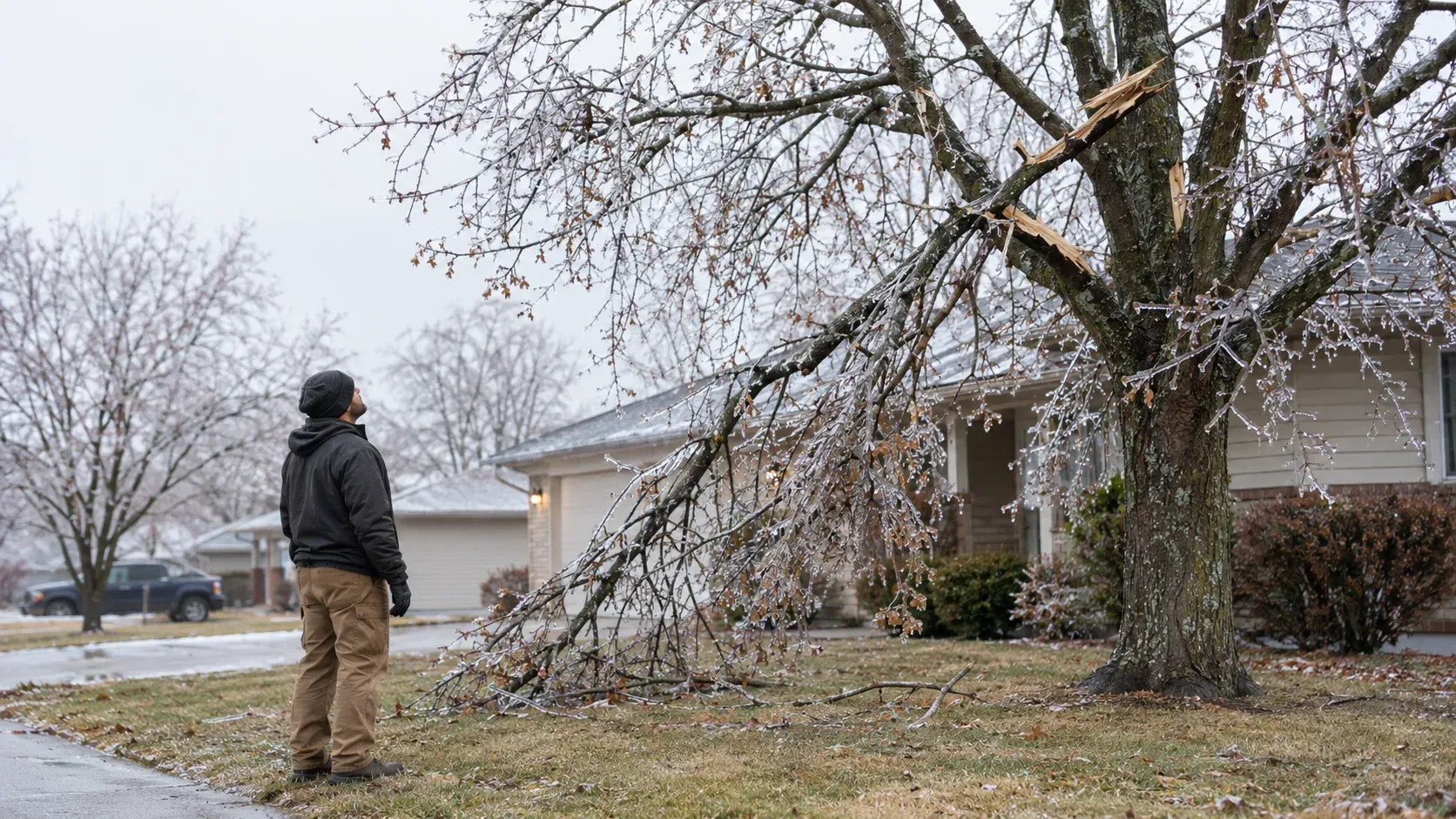
Table of Contents
- Introduction
- What Decides Whether Ice Storm Tree Damage Is Survivable
- Before You Assess Anything: The Safety Part
- Damage That Usually Means the Tree Comes Down
- Damage That Usually Means the Tree Can Be Saved
- Why Ice Does This Kind of Damage in the First Place
- Winter Storm Tree Damage in Iowa: The Species That Suffer Most
- Tree Salvage vs Removal: How We Walk a Property After an Ice Storm
- What Not to Do in the First Week
- What Recovery Actually Looks Like
- Conclusion
- Request an Emergency Storm Damage Assessment
- Frequently Asked Questions
Key Takeaways
- An ice-damaged tree can often be saved if the trunk is sound, the main leader is intact, and enough of the crown survived to feed the tree.
- A split trunk, a lost leader on a single-leader species, or a root plate that has lifted usually means removal. Those are structural, not cosmetic.
- How bad it looks and how bad it is are different questions. Trees that look destroyed sometimes recover, and trees that look fine sometimes have a trunk crack you cannot see from the driveway.
- Do not touch anything near a power line. Call the utility, not a tree service, and not yourself.
- Resist doing the cleanup in week one. Broken wood needs proper cuts, and rushed cleanup causes more damage than the storm did in plenty of cases.
Introduction
An ice-damaged tree can often be saved, and what decides it is structure rather than mess. If the trunk has no major split, the main leader is still there, the root plate has not lifted, and most of the crown survived, the odds are reasonable. If the trunk is split, the leader is gone on a species that only has one, or the tree has tipped, it is usually coming down no matter how much of the canopy looks fine.
We get a run of these calls after every serious ice event, and what surprises people most is how poorly appearance predicts outcome. We have written off trees that looked almost untouched, because of one crack running down the trunk. We have saved trees the homeowner had already given up on.
So here is what we actually look at, in the order we look at it.
What Decides Whether Ice Storm Tree Damage Is Survivable
Five things, roughly in order of how much they matter:
- The trunk. A vertical split, a long crack, or a section where the trunk has torn open is usually the end of the conversation. The trunk holds everything up and it does not heal like a branch wound.
- The main leader. On species that grow with a single central leader, losing it is a serious structural problem. On species that naturally grow multiple leaders, it matters far less.
- How much crown is gone. A tree needs leaves to rebuild. Lose most of the crown and the tree may not have the resources to recover, even if the trunk is perfect.
- The root plate. If the tree has shifted, if there is soil heaving or cracking on one side of the base, or if there is a gap where the trunk meets the ground, the anchoring is compromised. That does not grow back.
- The scaffold branches. The main structural limbs. Losing one or two is survivable. Losing most of them leaves a tree that has to rebuild its entire architecture.
Two things sit alongside those. Species matters, since some trees compartmentalise wounds and resprout well and others do not. And the target matters, which is a blunt way of saying a marginal tree over open lawn is a different decision from the same tree over a bedroom.
Before You Assess Anything: The Safety Part
We are putting this above the assessment sections on purpose, because it is the only part of this article where getting it wrong can kill somebody.
If any part of the tree is touching or near a power line, stay away from it and call the utility. Not us. Not a neighbour with a chainsaw. The utility. A line does not have to be arcing or sparking to be live, and ice-loaded branches can bring a line down minutes or hours after the storm passed. This also applies to a branch resting on a service drop to the house.
Beyond lines:
- Stay out from under the tree. Ice-loaded and partly broken limbs drop without warning, and they drop during the thaw as much as during the storm.
- Look up before you walk near it. Hangers, branches broken but still lodged in the canopy, are the most common way people get hurt after a storm.
- Do not climb it, and do not put a ladder against it.
- Keep everyone off that side of the property until it has been looked at, kids and pets included.
- Wait for the ice to come off before doing anything non-urgent. A branch that seems stable under load behaves differently as it thaws.
- Do not run a chainsaw overhead or on anything under tension. Broken limbs store energy and release it unpredictably.
If the tree is on the house, on a vehicle, or blocking your only way out, that is an emergency call rather than an assessment. We run 24/7 emergency service for exactly that.
Damage That Usually Means the Tree Comes Down
The signs that push us toward removal:
- A split or cracked trunk, particularly a vertical crack or a seam that has opened
- The main leader broken out on a single-leader species
- More than roughly half the crown gone, and the more that is missing the worse the odds
- A leaning trunk that was not leaning before, which usually means root failure
- Soil heaving, cracking or a gap at the base on the side opposite a lean
- Most of the major scaffold limbs torn off, leaving a trunk with almost nothing on it
- A large tear where a limb ripped out, taking a strip of trunk bark with it
- Extensive bark loss around the circumference, which interrupts the tissue that moves food up and down the tree
- Existing decay, cavities or fungal bodies exposed or made worse by the break
- The tree was already in decline, and the ice finished a job that was underway
Any one of the first five is usually decisive on its own. Several of the rest together add up to the same answer.
Damage That Usually Means the Tree Can Be Saved
The more encouraging list, and it is longer than people expect:
- Broken small and medium branches with the trunk and leader intact. This is the overwhelming majority of what we see.
- Bent but unbroken trunk or limbs on a young or flexible tree, which often straighten over a season or two
- Most of the crown still there, even if it looks ragged
- Clean breaks that can be cut back to a proper collar
- One scaffold limb lost out of several
- Minor bark scrapes that have not gone around the trunk
- Multi-leader species that lost one leader, where the remaining structure can take over
- Damage concentrated on one side with the other side sound
A tree in this category needs proper cuts to clean up the breaks, and then time. Not much else.
Why Ice Does This Kind of Damage in the First Place
Worth understanding, because it explains the damage patterns and why some trees fail while their neighbours do not.
Ice adds weight. A lot of it, spread across every twig and branch surface, which is enormous surface area on a mature tree. The load builds gradually over hours, so branches bend rather than snapping, and then they either hold or the wood fails.
That slow loading is why ice damage looks different from wind damage. Wind tears limbs off and twists them. Ice bends everything down and then breaks it at the weakest structural point, usually a narrow branch union or a spot where included bark was already pinched.
It is also why a tree's pre-existing condition matters so much. An ice storm does not choose randomly. It finds the co-dominant leaders, the tight unions, the old wounds and the decay, and loads them until they let go.
Winter Storm Tree Damage in Iowa: The Species That Suffer Most
Some trees take ice better than others, and the pattern holds pretty consistently across the properties we work on.
The ones that struggle have brittle wood, weak branch unions, or dense fine branching that catches a lot of ice. Fast-growing species are generally worse than slow-growing ones, because fast growth usually means lower wood density. The ones that handle it better have strong wood, wider branch angles and coarser branching.
We are deliberately not publishing a ranked species list, because the honest version depends on the tree's structure more than its species label. A well-structured silver maple with wide unions will outperform a poorly structured oak with a split leader. Species is a tendency, not a prediction.
If you have a tree that has failed in ice before, or one with two competing trunks, that is the one to have looked at before the next storm rather than after it.
Tree Salvage vs Removal: How We Walk a Property After an Ice Storm
The order we work in:
- Hazards first. Anything on a structure, over a walkway or near a line gets identified before we assess anything else. Lines go to the utility.
- Hangers. Broken limbs still lodged in canopies. These come down early because they are the active danger.
- The trunk, on every damaged tree. Walk the full circumference, look for cracks, seams, tears and bark loss. This is where the decision usually gets made.
- The leader and scaffold structure. What is left, and can it function as a crown.
- The base and root plate. Soil condition, heaving, gaps, any change in lean.
- Crown loss estimate, and what remains to feed the tree.
- The target. What the tree would hit if it failed later.
- Pre-existing condition. Old wounds, decay, prior topping, previous failures.
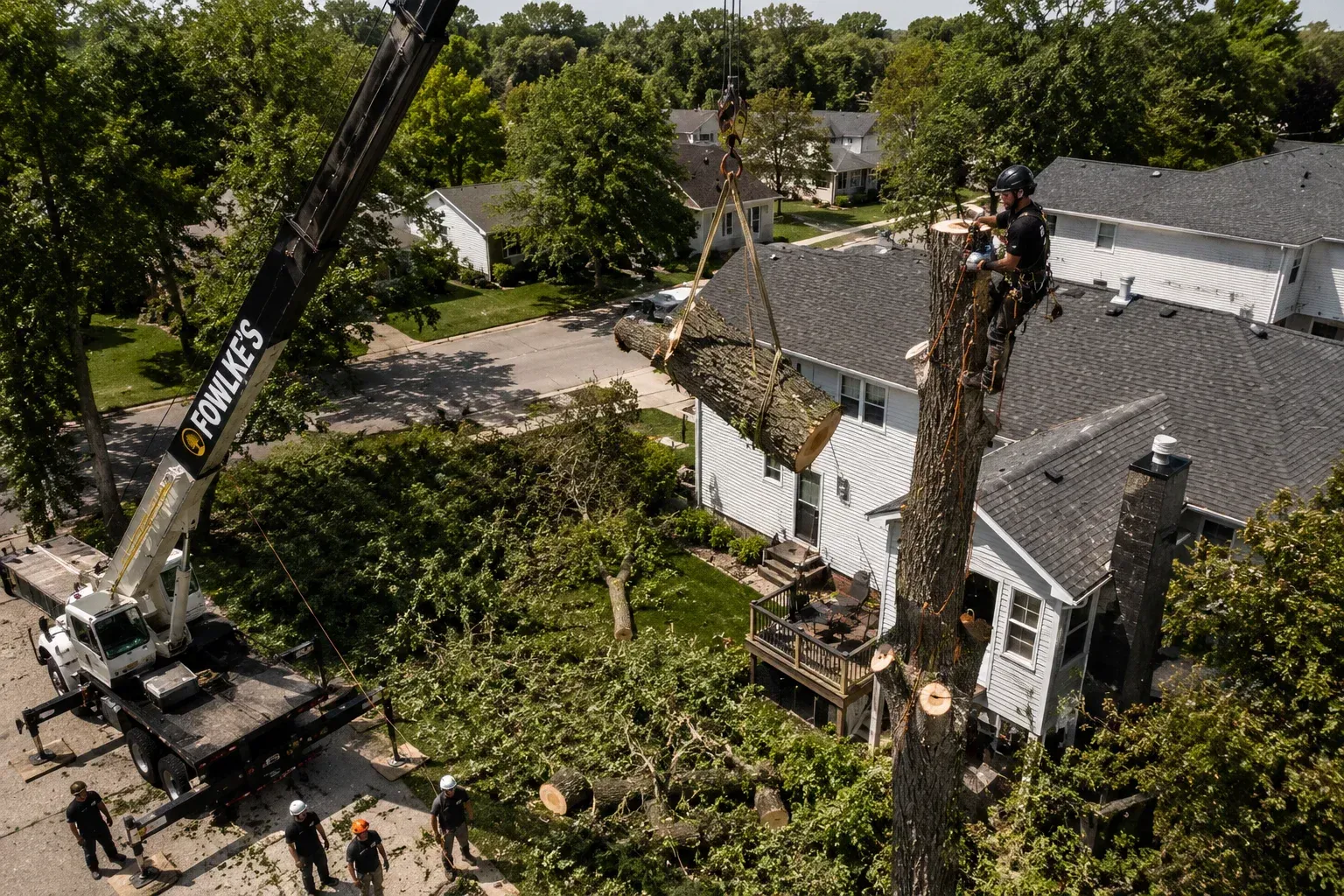
Then we give you an answer. Our removal work runs as a five stage process, from assessment and planning through cleanup and stump grinding, and for trees in awkward spots near a house we use crane-assisted removal rather than trying to rig a compromised tree.
There is also a middle outcome worth naming. Sometimes the answer is neither save nor remove today. It is monitor: clean up the breaks, then look again next season. Trees that lose a lot of crown but keep their structure usually tell you the answer within one growing season.
The decision shape here is similar to what we cover on assessing a tree after a lightning strike, though the damage pattern is completely different, a single point of catastrophic injury rather than distributed load failure.
What Not to Do in the First Week
The mistakes that cost people money:
- Rushing the cleanup. Broken wood needs cutting back to the right point, not just clearing off the lawn. Bad cuts now become decay columns later.
- Cutting the tree back hard "to help it recover." Topping a storm-damaged tree makes everything worse, and it is the most common well-intentioned mistake we see.
- Removing a tree in week one that might be fine. Nobody regrets waiting two weeks. Plenty of people regret removing a tree that was salvageable.
- Hiring the first truck that knocks. Out-of-area crews canvass door to door after a storm. Ask for proof of insurance before anyone touches a tree, because if they get hurt on your property uninsured, that becomes your problem.
- Paying up front in cash to somebody with no local address.
- Doing it yourself with a homeowner chainsaw. Storm-damaged wood is under tension and does not cut predictably. This is where the serious injuries happen.
- Throwing out the evidence before photographing everything, if you may file a claim.
On insurance, take dated photos from several angles before any cleanup starts, and keep receipts for anything you spend. Whether your policy responds depends on the policy and the type of damage, so that is a conversation with your carrier rather than with us.
What Recovery Actually Looks Like
If a tree is worth saving, the timeline is longer than most people expect and quieter than they hope.
The first season is about closing wounds and pushing whatever growth the tree can manage. It will look thin. That is normal. Watering through dry stretches that first summer matters more than anything else you can do.
The second and third seasons are when you find out. A recovering tree fills in, and you can start light corrective pruning to rebuild structure around what was lost. A failing tree shows you: dieback progressing, sparse leaf-out, weak growth.
What we would not do is a heavy pruning pass in year one. The tree needs its leaves. Clean up the breaks, then leave it alone and look again later.
Conclusion
Ice damage is decided by structure. A sound trunk, an intact leader, a stable root plate and enough remaining crown means a tree usually has a real chance. A split trunk, a lost leader, a lifted root plate or most of the canopy gone usually means it does not.
The part that matters most in the first few days has nothing to do with that assessment, though. Stay out from under the tree, keep away from anything touching a line, and do not let somebody talk you into removing a tree in week one that might still be standing in thirty years.
Request an Emergency Storm Damage Assessment
If an ice storm has damaged a tree on your property, we will come look at it and give you a straight answer on whether it can stay. If it is in your house, on a vehicle or blocking access, call us and say so, because that moves to the front of the queue. We run 24/7 emergency service.
Fowlkes Tree and Stump Removal is a family-owned business that has been doing this since 2013, and we are fully licensed and insured, which is worth confirming with anyone who shows up in your driveway after a storm. Free quotes and consultations, including the visits where we tell you the tree is fine.
We cover Evansdale along with Cedar Falls, Waterloo, Independence, La Porte City, Hudson, Denver and Center Point. Our
tree service in Evansdale includes crane-assisted removal for trees in tight spots. Call
(319) 327-1199.
Frequently Asked Questions
How much crown loss can a tree survive after an ice storm?
The more that is gone, the worse the odds, and past roughly half the crown recovery becomes doubtful. It depends heavily on species and on whether the trunk and leader survived. A tree with an intact structure and a thin crown has better prospects than the reverse.
Will a bent tree straighten out on its own after an ice storm?
Young and flexible trees often do, over a season or two, once the ice load comes off. Mature trees that have taken a permanent set usually do not. If the bend came with root movement at the base, that is a different and more serious problem.
Should I cut a storm-damaged tree back hard to help it recover?
No. Cutting it back hard removes the leaves it needs to rebuild and creates a cluster of weak new growth. Clean up the breaks with proper cuts, then leave it through a growing season and reassess.
How soon should a damaged tree be looked at?
Immediately if it is on a structure, near a line or blocking access. Otherwise within a week or two is fine, and waiting a little is better than removing a salvageable tree in a panic. Hangers lodged in the canopy are the exception, since those are an active hazard.
Does homeowners insurance cover ice storm tree damage?
It depends on the policy and the type of damage involved. Many policies respond to structural damage caused by a fallen tree while treating removal differently. Photograph everything before cleanup, keep receipts, and confirm the specifics with your carrier.
Related Posts