How Trees Can Impact Nearby Utility Lines Without Touching Them
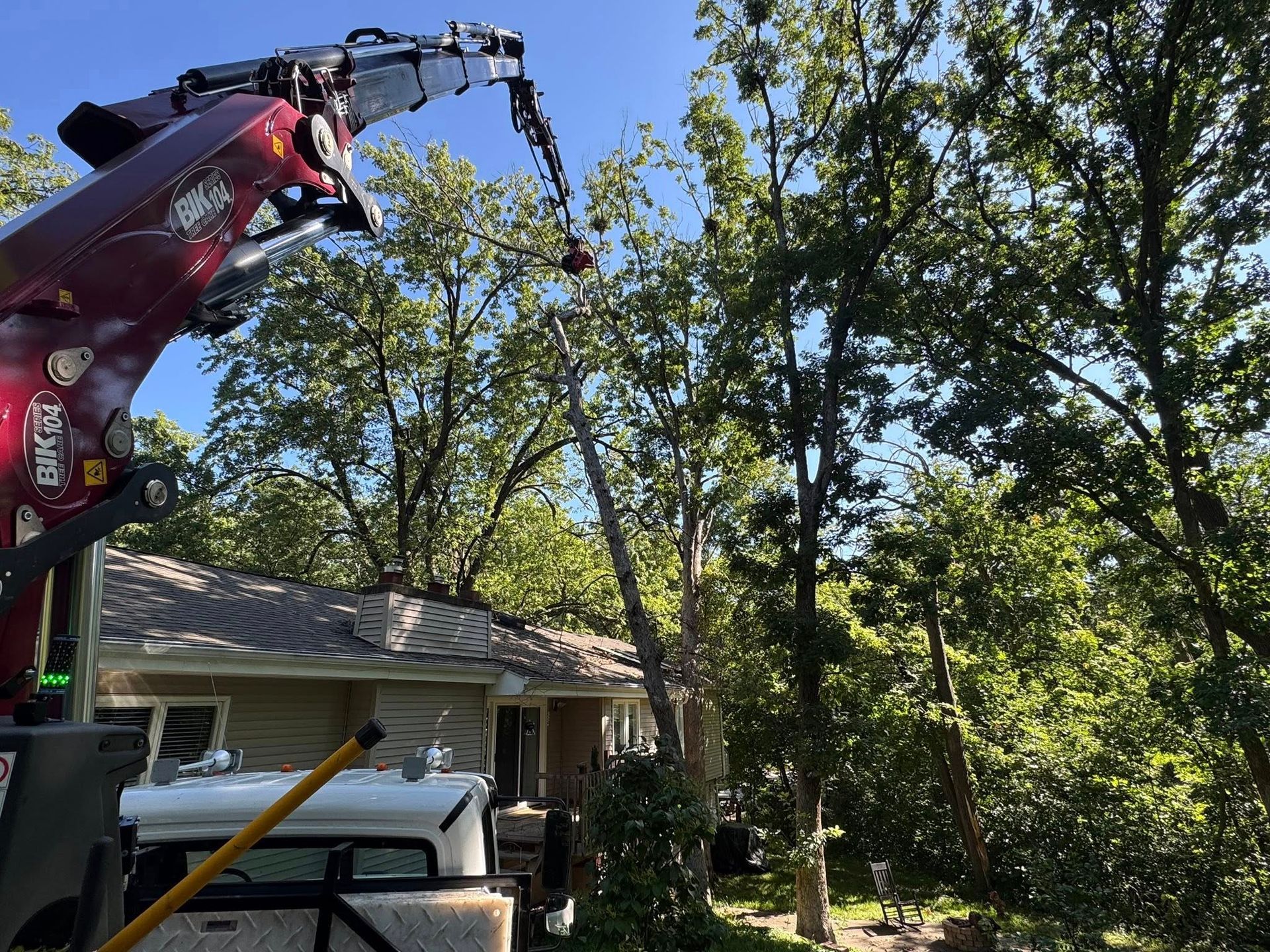
Table of Contents
- Introduction
- How Nearby Trees Can Affect Utility Lines
- Root Systems and Underground Infrastructure
- Tree Growth and Utility Line Clearance
- Weather, Weight, and Tree Movement
- Infrastructure Risks in Residential Areas
- Monitoring and Preventative Planning
- When Professional Tree Care May Be Necessary
- Conclusion
- Book a Tree Removal Service
- Frequently Asked Questions
Key Takeaways
- Trees do not have to touch utility lines to create potential safety or infrastructure concerns.
- Root growth and soil movement can affect underground utility infrastructure.
- Tree growth can gradually reduce clearance around overhead lines.
- Wind, ice, snow, and heavy rain can increase the movement and instability of nearby trees.
- Regular monitoring and professional tree care can help identify developing risks before they become more serious.
Introduction
Trees can impact nearby utility lines without touching them by growing into clearance zones, shifting with wind and weather, and affecting the soil around underground infrastructure. These indirect risks can develop gradually, making them easy to overlook until a tree or utility system becomes difficult to manage.
How Nearby Trees Can Affect Utility Lines
Utility lines require adequate clearance to remain accessible and safe. Trees are constantly growing and responding to their surroundings, so a tree that appears safely positioned today may gradually become a concern as its branches or canopy expand.
A tree can also move significantly during strong winds, heavy snow, or ice accumulation. This means the distance between a tree and a utility line should not be considered only under calm conditions.
For homeowners, the important point is that proximity itself can create a potential concern. Monitoring trees near utilities allows changes in growth, structure, and surrounding conditions to be identified before they create a more immediate problem.
Root Systems and Underground Infrastructure
Utility concerns are not limited to overhead lines. Underground infrastructure can also exist near established trees and their root systems.
Tree roots naturally grow through the soil in search of water, oxygen, and space. As they expand, they can alter surrounding soil conditions and make access to buried infrastructure more difficult.
Soil Movement and Stability
Root growth can contribute to changes in the surrounding soil. Moisture fluctuations can also affect soil conditions, particularly when weather patterns shift between wet and dry periods.
These changes do not necessarily mean that roots will directly damage underground utilities. However, they can contribute to conditions that make buried infrastructure more difficult to access or maintain.
Access and Maintenance Challenges
Dense root systems can also complicate future work around underground utilities. When repairs, upgrades, or inspections are necessary, extensive roots may make excavation more challenging.
For this reason, infrastructure tree risks should be considered when planning long-term property maintenance, especially around mature trees.
Tree Growth and Utility Line Clearance
Trees do not grow in a fixed shape. Their branches and canopies respond to sunlight, available space, surrounding vegetation, and environmental conditions.
A tree near an open utility corridor may gradually grow toward that space. Over time, branches can extend farther into areas that require consistent clearance.
Directional Growth
Trees often grow toward available sunlight. If utility lines run through an open area, branches may eventually extend toward that opening.
This growth can happen slowly enough that homeowners do not notice the changing clearance from one season to the next. Regular observation makes it easier to identify these gradual changes.
Different Trees Grow Differently
Tree species have different growth rates, canopy structures, and branching patterns. Some develop broad lateral branches, while others grow taller and narrower.
Because of these differences, a tree near utility lines should not be evaluated solely by its current size. Its expected growth and structure are also relevant when considering long-term clearance.
Weather, Weight, and Tree Movement
Weather can change the relationship between a tree and nearby utility lines in a matter of hours.
Wind and Sway
Trees naturally move in strong winds. A tree that has sufficient clearance while standing still may move significantly during a storm.
Repeated exposure to strong winds can also contribute to changes in a tree's structure or lean. If a tree is already growing near utility infrastructure, these movements deserve attention.
Ice and Snow
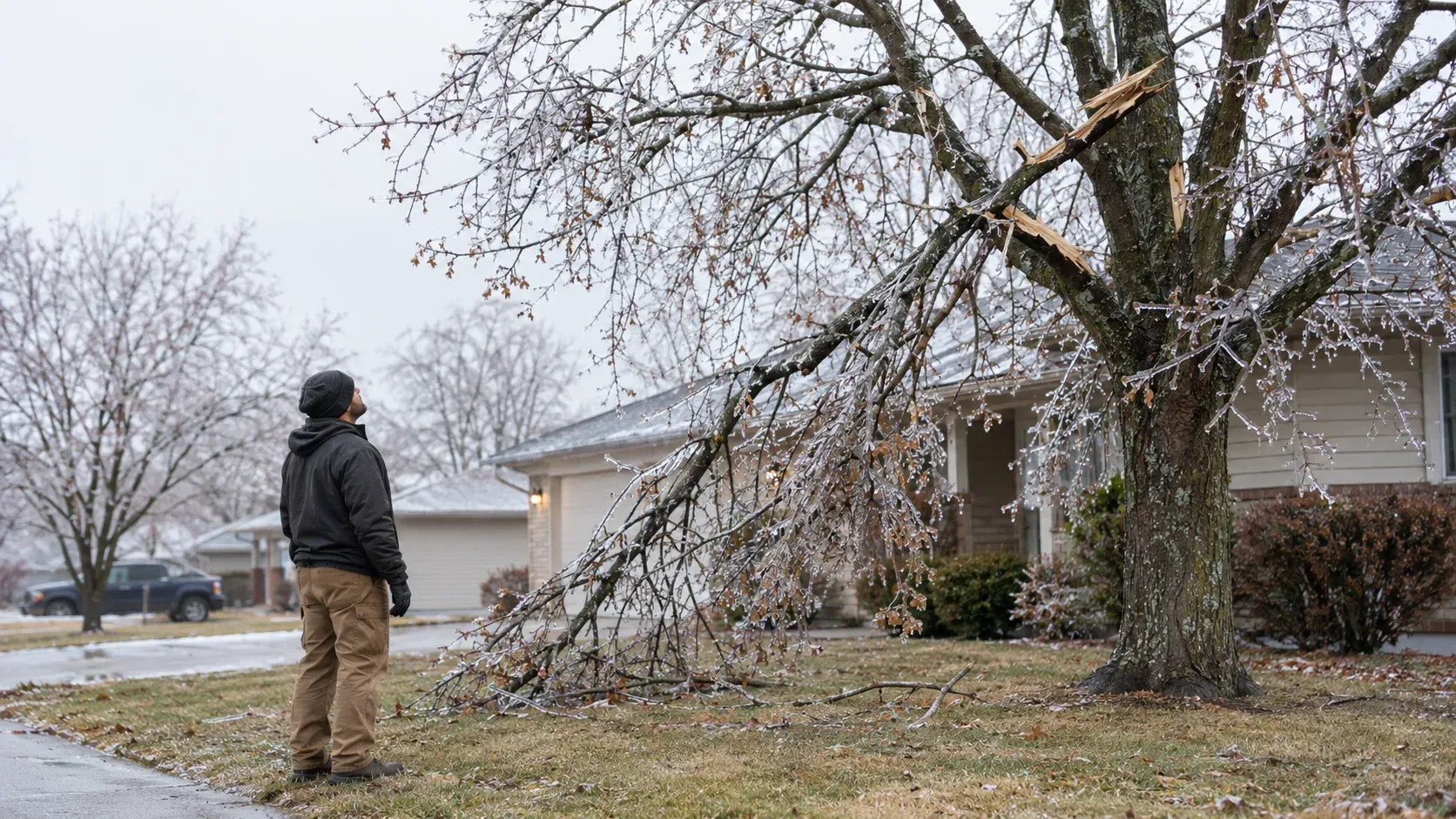
Ice and snow add weight to branches. That additional weight can cause branches to droop closer to nearby utility lines, even if there is adequate clearance under normal conditions.
Heavy accumulation can also increase the likelihood of branch failure. This is one reason trees near utility corridors should be monitored before and after severe winter weather.
Storm Debris
A tree does not necessarily have to be directly above a utility line for falling debris to create a problem. Wind can move branches and other debris from nearby trees into areas containing utility infrastructure.
This is another example of why distance alone does not always tell the full story.
Infrastructure Risks in Residential Areas
Residential properties frequently have mature trees growing near homes, driveways, streets, and utility infrastructure. As these trees age, structural problems can develop even when there are no obvious signs of trouble.
Aging Trees and Hidden Defects
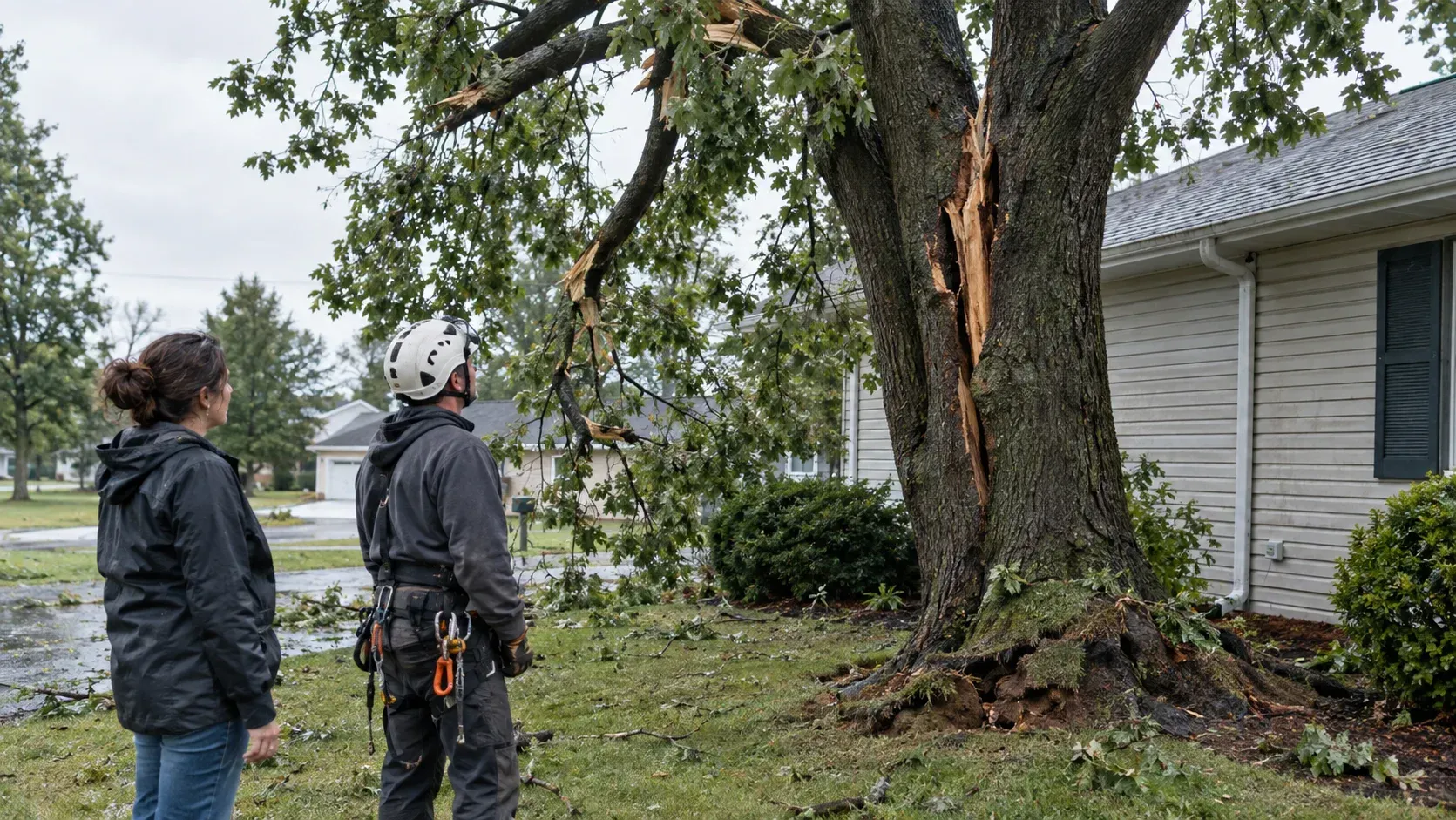
Older trees can develop internal decay, weakened branches, or compromised root systems. Some defects may not be obvious from the ground.
A tree that has never touched a utility line can still become a concern if its structure deteriorates or its position changes.
Professional tree removal may eventually be necessary when a tree becomes hazardous or structurally compromised. Fowlkes Tree And Stump Removal evaluates trees and their surroundings to determine an appropriate approach for difficult or hazardous removals.
Cumulative Risk Over Time
Infrastructure tree risks often develop gradually. A tree grows, its canopy expands, roots spread, and weather conditions change. None of these factors may create an immediate issue on its own, but their combined effect can increase the potential for problems over time.
This is why regular observation is more useful than waiting until a tree is visibly contacting a utility line.
Monitoring and Preventative Planning
Preventative tree care starts with paying attention to changes around the property.
Perform Routine Visual Checks
After storms and seasonal changes, look for:
- New or unusual leaning
- Broken or hanging branches
- Changes in canopy growth
- Soil movement around the base of the tree
- Signs of root exposure or instability
- Reduced clearance around nearby utility infrastructure
These checks are not a substitute for professional evaluation, but they can help homeowners recognize when a situation deserves additional attention.
Schedule Professional Assessments
When a mature tree is close to utility infrastructure, a professional assessment can provide a better understanding of its condition and potential risks.
Fowlkes Tree And Stump Removal provides tree pruning and removal services designed to maintain tree health, improve safety, and address hazardous trees.
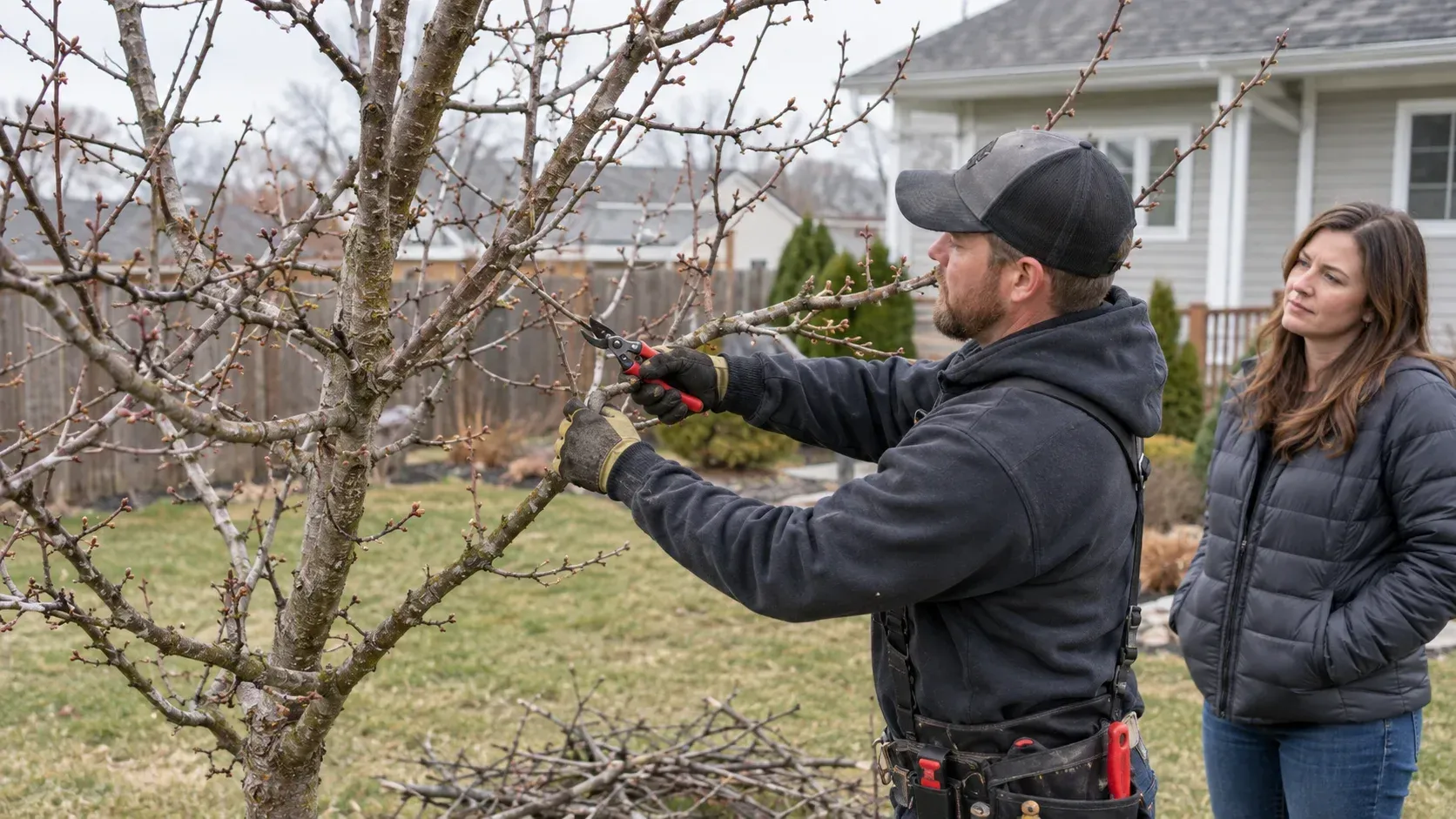
Regular pruning may be appropriate when a tree can safely remain in place. Removal may be considered when a tree is dead, diseased, structurally compromised, or otherwise presents a significant hazard.
Keep Track of Changes
It can also be useful to document major pruning, storm damage, and other changes to trees near utility infrastructure. Keeping a simple record can make it easier to recognize long-term changes in growth or structure.
If a utility company needs to access infrastructure on your property, having information about previous tree work can also help provide useful context.
When Professional Tree Care May Be Necessary
Not every tree near a utility line needs to be removed. The appropriate solution depends on the tree's condition, location, growth pattern, and surrounding infrastructure.
Professional tree care may be worth considering when:
- A tree is growing increasingly close to overhead utility lines.
- Branches have begun extending into a utility corridor.
- A tree has developed a noticeable lean.
- Storm damage has affected branches or the trunk.
- The tree shows signs of decay or structural weakness.
- Root problems appear to be affecting the surrounding ground.
- You are unsure whether pruning or removal is the safer option.
If a tree can be maintained safely, pruning may help manage its growth and structure. When removal is necessary, experienced professionals can plan the work around nearby structures and other potential hazards.
For homeowners dealing with a tree that has already fallen or sustained major storm damage, knowing what to do when a tree falls on your property can help you prioritize safety before cleanup begins.
Conclusion
Trees can affect nearby utility infrastructure without ever making direct contact with a line. Growth patterns, root systems, soil conditions, wind, ice, snow, and structural changes can all influence the relationship between trees and utilities.
The safest approach is to monitor trees near utility infrastructure and address developing concerns before they become emergencies. Professional assessment can also help determine whether a tree needs pruning, continued monitoring, or removal.
If you are concerned about a tree growing near utility lines, Fowlkes Tree And Stump Removal can assess the situation and discuss appropriate tree care options.
Book a Tree Removal Service
If a tree near your property has become hazardous, is growing too close to utility infrastructure, or has sustained storm damage, contact Fowlkes Tree And Stump Removal to discuss your options. You can call
(319) 327-1199 or use the contact form to request an assessment.
Frequently Asked Questions
Can a tree be dangerous to utility lines without touching them?
Yes. Trees can influence utility lines through root growth, soil movement, canopy expansion, and weather-related movement, even when no direct contact occurs.
Can tree roots affect underground utilities?
Roots can alter surrounding soil conditions and make access to buried infrastructure more difficult. The specific risk depends on the tree, root system, soil, and type and location of the underground utility.
Should a tree near utility lines always be removed?
No. Some trees can remain safely with appropriate monitoring or pruning. The right approach depends on the tree's condition, location, growth, and surrounding infrastructure.
Can wind make a tree near utility lines more dangerous?
Yes. Wind can cause branches and the tree canopy to sway, temporarily reducing clearance. Strong winds can also contribute to branch or tree failure.
Who should I contact if a tree is dangerously close to a utility line?
If there is an immediate utility-related hazard, contact the appropriate utility provider and keep people away from the area. For concerns about the tree itself, a professional tree service can assess its condition and discuss available tree care options.
Related Posts