Can Extreme Summer Heat and Drought Stress Damage Your Trees in Iowa?
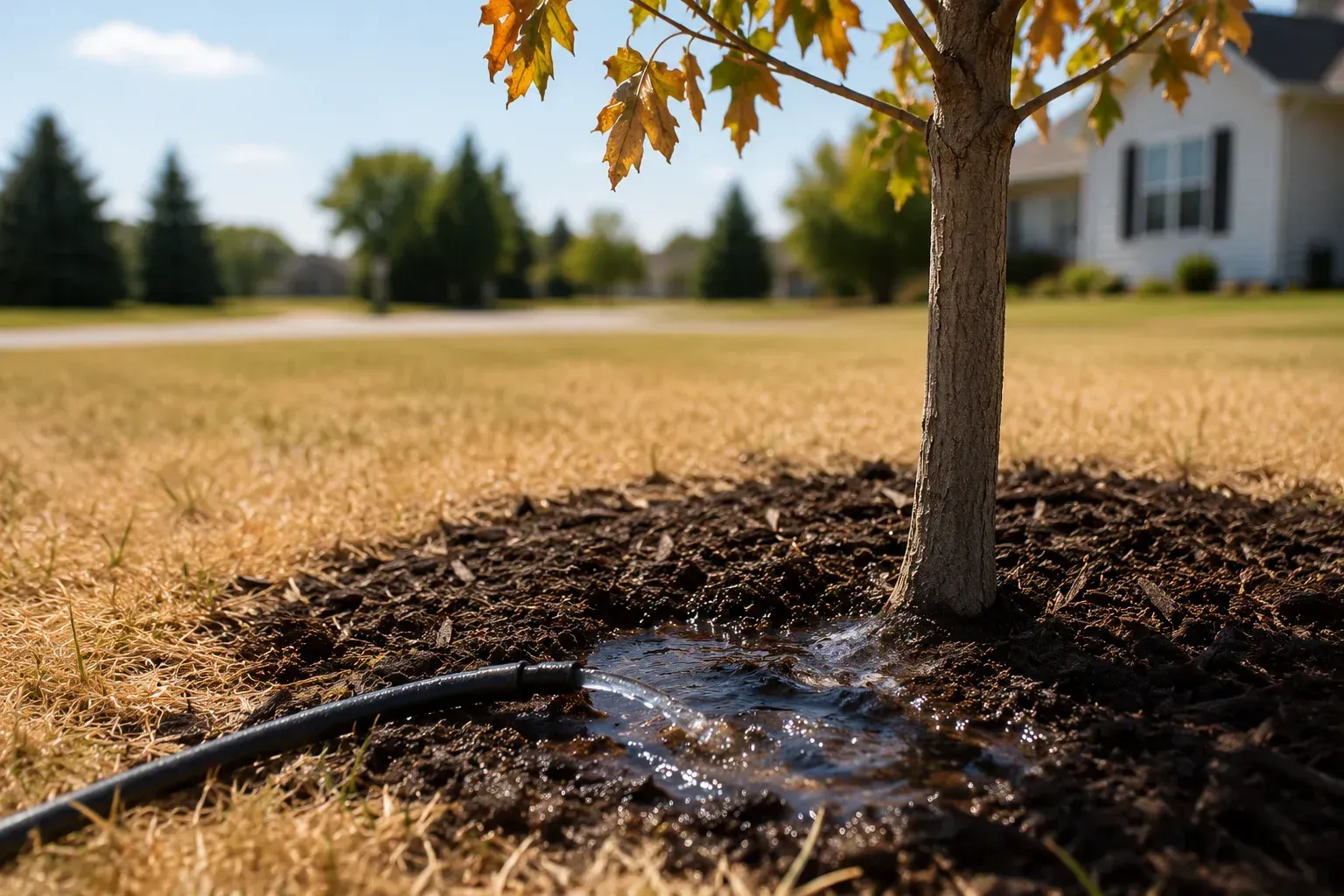
Table of Contents
- Introduction
- How Heat and Drought Affect Trees
- Common Signs of Heat and Drought Stress
- The Long-Term Effects on Tree Health
- Which Iowa Trees Are Most Vulnerable
- Practical Tree Care During Summer
- When Stress Turns Into a Safety Concern
Key Takeaways
- Yes, prolonged summer heat and drought can damage trees in Iowa, and the effects sometimes show up months or even a year later.
- Early warning signs include wilting, leaf scorch, early leaf drop, and thinning canopies.
- Newly planted trees, shallow-rooted species, and non-native trees tend to struggle the most in dry conditions.
- Deep, infrequent watering usually helps more than frequent light watering during a drought.
- A stressed tree is more open to pests and disease, so watching for changes early gives you more options.
Introduction
Yes, extreme summer heat and drought stress can damage trees in Iowa, and the harm is not always obvious right away. A tree can look fine in August and still be carrying damage that shows up the following spring as dead branches or a thin canopy.
This matters because Iowa summers have had their share of hot, dry stretches, and trees that go into those stretches already weakened tend to fare worse. If you care about the trees on your property, knowing what heat and drought do to them helps you respond before small problems turn into bigger ones. Our team offers tree care in Independence and across the surrounding area, and much of what we see during dry summers traces back to stress that went unnoticed.
How Heat and Drought Affect Trees
Trees pull water up from their roots and release it through tiny openings in their leaves. When soil moisture runs low, the tree cannot keep up with that loss, so it starts to close those openings to conserve water.
Closing them slows the tree down. It takes in less carbon dioxide, makes less food, and grows more slowly. During a short dry spell that is a reasonable trade-off. During a long one, the tree runs low on stored energy.
Heat adds to the problem. Higher temperatures speed up water loss from leaves and dry out the soil faster. When heat and drought hit at the same time, the tree is losing water quickly while having very little to replace it with.
Common Signs of Heat and Drought Stress
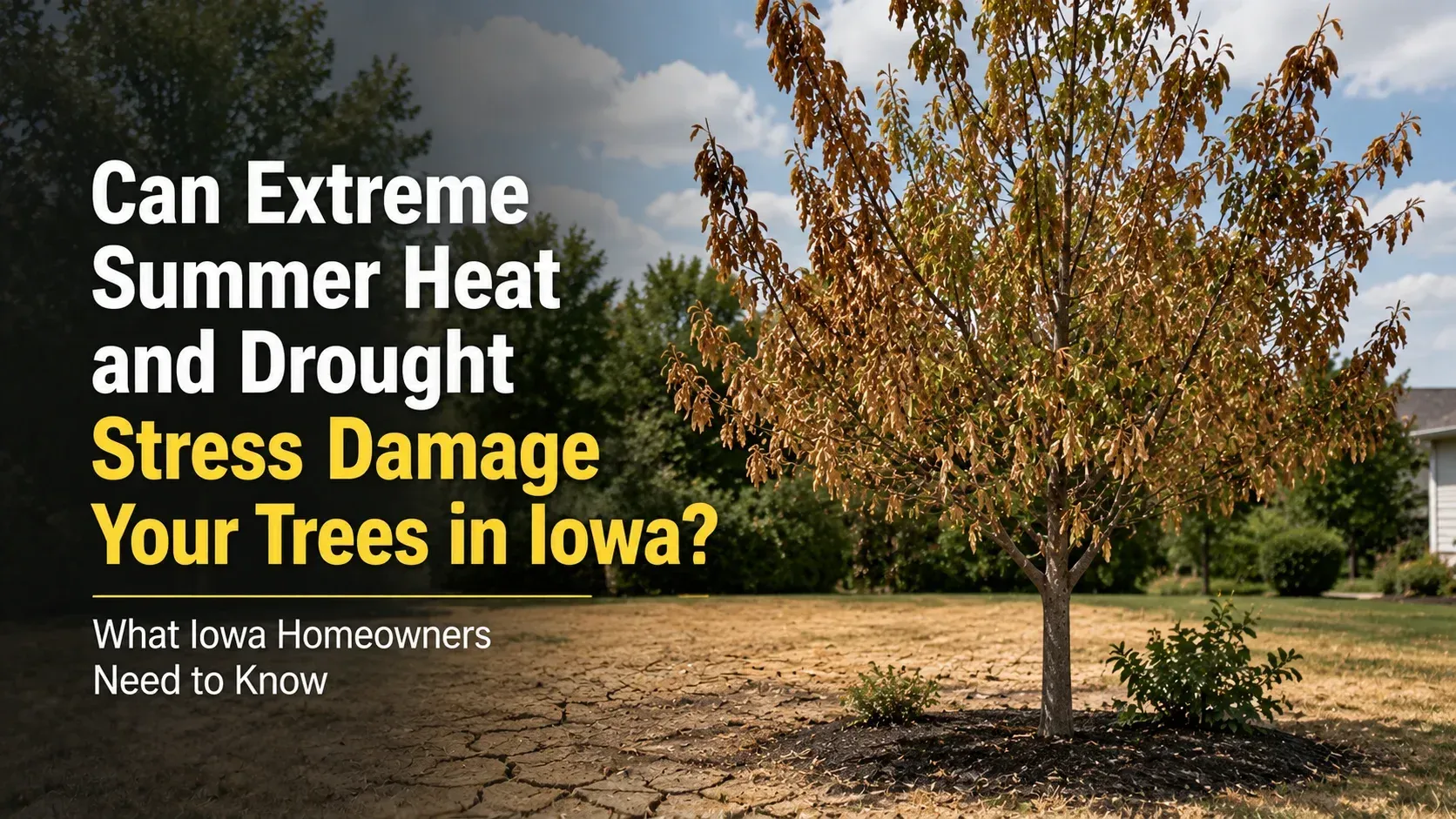
Stress often shows in the leaves first. Watch for wilting during the hottest part of the day, curled or drooping leaves, and browning along the edges or tips, which is called leaf scorch.
Some trees drop leaves early to cut their water needs. Seeing leaves turn yellow or brown and fall in July or August, well before autumn, is a fairly common response to a dry summer.
Other signs are easier to miss. A canopy that looks thinner than usual, smaller leaves than in past years, or new growth that stalls out can all point to a tree conserving resources. None of these signs proves drought on its own, but together they are worth paying attention to.
The Long-Term Effects on Tree Health
The bigger concern with heat and drought stress is what happens after the weather breaks. A tree that used up its stored energy fighting through a dry summer heads into fall and winter with less in reserve.
That is when secondary problems tend to move in. A weakened tree is a more inviting target for certain insects and diseases, which can do damage a healthy tree would have shrugged off. In some cases the drought sets the stage and a pest finishes the job a year or two later.
Root damage is another slow-moving effect. When fine feeder roots die back during a drought, the tree has less capacity to take up water even after the rain returns. Recovery can take several seasons, and some trees never fully bounce back.
This is also why a problem that looks sudden is often not sudden at all. A branch that dies in spring may have been compromised by the previous summer's stress.
Which Iowa Trees Are Most Vulnerable
Not every tree handles dry weather the same way. Newly planted trees are the most at risk because their roots have not spread far enough to reach deeper soil moisture. The first two to three years after planting are the hardest.
Shallow-rooted species tend to struggle more than deep-rooted ones. Birch, for example, is known for being sensitive to hot, dry conditions in this region. Maples and dogwoods can also show stress quickly during extended dry spells.
Trees planted in tough spots face added pressure. A tree surrounded by pavement, growing in compacted soil, or sitting in a narrow strip near a driveway has less room for roots and less access to water. Species that are not native to Iowa may also have a harder time than local trees that evolved with the region's weather.
Older, established trees are generally more resilient, but they are not immune. A large mature tree that has been slowly declining for other reasons can be pushed over the edge by a bad drought year.
Practical Tree Care During Summer
The most useful thing you can do during a dry stretch is water deeply and less often. Long, slow watering encourages roots to grow downward, while frequent light sprinkling keeps roots shallow and more exposed to heat.
Focus the water around the outer edge of the canopy, not right against the trunk, since that is where most of the active roots are. A slow soak that reaches down several inches into the soil does far more good than a quick surface spray.
Mulch helps hold that moisture in. A layer of wood chips a few inches deep over the root zone keeps the soil cooler and slows evaporation. Keep the mulch pulled back a few inches from the trunk so it does not trap moisture against the bark.
Go easy on other stressors during a drought. This is not the season for heavy tree pruning, since removing a lot of foliage adds strain to a tree that is already working hard. Light pruning to take out clearly dead or broken limbs is fine, but major cuts are better left for a healthier time of year.
Fertilizer is another thing to hold off on. Pushing new growth when a tree cannot support it usually does more harm than good. When in doubt, water and wait.
When Stress Turns Into a Safety Concern
Most drought-stressed trees can recover with a little help, but some cross into territory where they become a risk. Large dead limbs over a house, driveway, or play area are worth taking seriously, because dead wood is more likely to fail in wind.
If a tree has lost a big portion of its canopy, is dropping sizable branches, or shows soft or peeling bark and cracks in the trunk, those are reasons to have someone take a closer look. A tree that is mostly dead may be past the point of recovery, and in those cases tree removal may be the safer path.
Deciding whether a tree can be saved or should come out is not always clear from the ground. An in-person assessment gives you a better read on the tree's condition and your options.
Conclusion
Extreme summer heat and drought put real strain on Iowa trees, and the damage often shows up gradually rather than all at once. Watching for signs like leaf scorch, early leaf drop, and thinning canopies helps you catch trouble early, while deep watering, mulch, and holding off on pruning and fertilizer give a stressed tree a better chance to get through the season.
Some trees recover on their own, some need a hand, and a few reach a point where safety becomes the main question. Knowing the difference is what lets you make a calm, informed call about the trees on your property instead of guessing.
Not Sure If Your Trees Made It Through the Dry Spell?
If you have noticed browning leaves, bare branches, or a tree that just does not look right after a hot summer, it can help to get another set of eyes on it. You are welcome to
contact us with your questions or to set up a look at your property. There is no pressure and no obligation, just straightforward guidance to help you decide what makes sense for your trees.
Frequently Asked Questions
How long does it take for drought stress to show in a tree?
It varies. Some signs, like wilting and leaf scorch, can appear within days of a hot, dry stretch. Other effects, such as dieback or pest problems, may not show up until the following season.
Can a drought-stressed tree recover?
Many can, especially if the stress was short and the tree was healthy going in. Recovery often depends on the species, the tree's age, and how much of its root system and canopy were affected.
How much should I water a tree during a drought?
A general approach is a deep, slow soak that reaches several inches into the soil, done less often rather than a little every day. Soil type and tree size affect the exact amount, so checking soil moisture a few inches down is a helpful guide.
Is it bad to prune a tree during a hot, dry summer?
Heavy pruning during a drought can add stress, since the tree loses foliage it uses to make food. Removing clearly dead or hazardous limbs is usually fine, but major pruning is often better saved for a healthier time of year.
When should I call a professional about a heat-stressed tree?
It is worth getting an assessment if a tree has large dead limbs, has lost a significant part of its canopy, or shows cracks, soft bark, or leaning. These can point to safety concerns that are hard to judge from the ground.
Related Posts