How Does Crane-Assisted Tree Removal Work for Large Trees in Waterloo, Iowa?
Key Takeaways
- Crane-assisted tree removal uses a crane to lift cut sections of a tree up and away, instead of dropping them to the ground.
- It is often used for large trees, hazardous trees, or trees in tight spots where a normal removal would risk nearby structures.
- The method can reduce the amount of climbing and controlled falling involved, which changes how the work is planned.
- It usually takes more setup and equipment, so it is not the right fit for every job.
- A professional assessment is what determines whether a crane is the safer approach for a specific tree.
Introduction
Crane-assisted tree removal works by using a crane to hold and lift sections of a tree as they are cut, then move those sections safely away instead of letting them fall. It is mainly used for large trees, damaged trees, or trees in tight spaces where dropping limbs the usual way would put nearby homes, fences, or power lines at risk.
This matters to Waterloo property owners because the area has plenty of mature trees, and large ones near houses can be difficult to take down without the right approach. Understanding how the method works helps you know what to expect and why it might be recommended. Our team handles tree service in Waterloo and the surrounding area, and crane-assisted work is one of the ways complex removals get done more safely.
What Crane-Assisted Tree Removal Means
In a standard removal, a climber or bucket cuts the tree into pieces that are lowered by rope or dropped to a clear area below. That works well when there is open space around the tree.
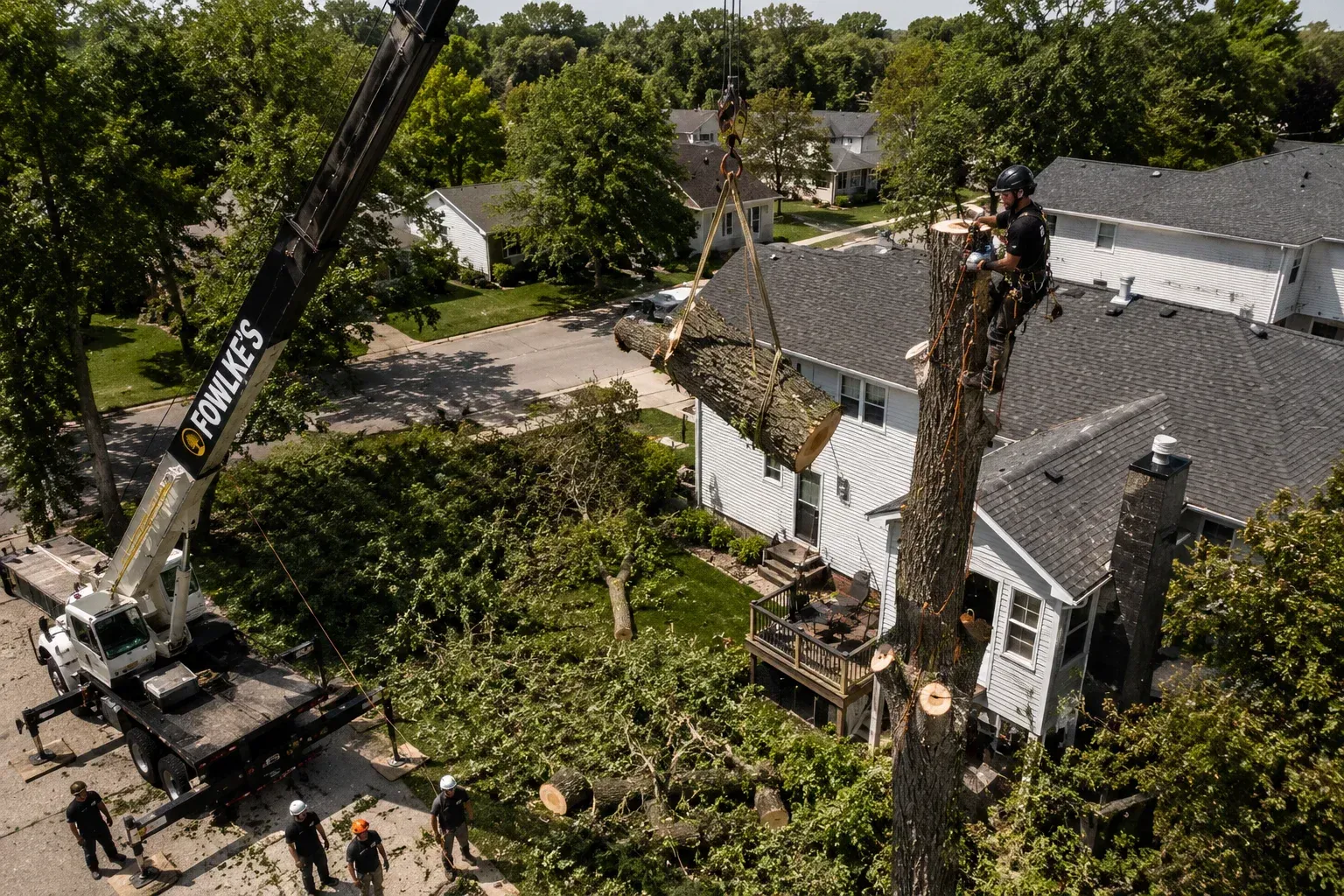
Crane-assisted removal changes that. A crane is positioned near the tree, and each cut section is secured to the crane before it is cut free. The crane then lifts the piece up and over any obstacles and sets it down in a safe spot.
The core idea is control. Instead of relying on a piece falling where planned, the weight is held by the crane the whole time, which keeps large sections from swinging or dropping onto whatever is below.
When a Crane Is Used Instead of Standard Removal
A crane is not needed for every tree. For many jobs, standard climbing or a bucket truck is perfectly suitable and more practical.
The method tends to come up when a tree is very large, structurally unsound, or surrounded by things that could be damaged. A big tree leaning over a roof, for example, leaves little room for error with traditional felling.
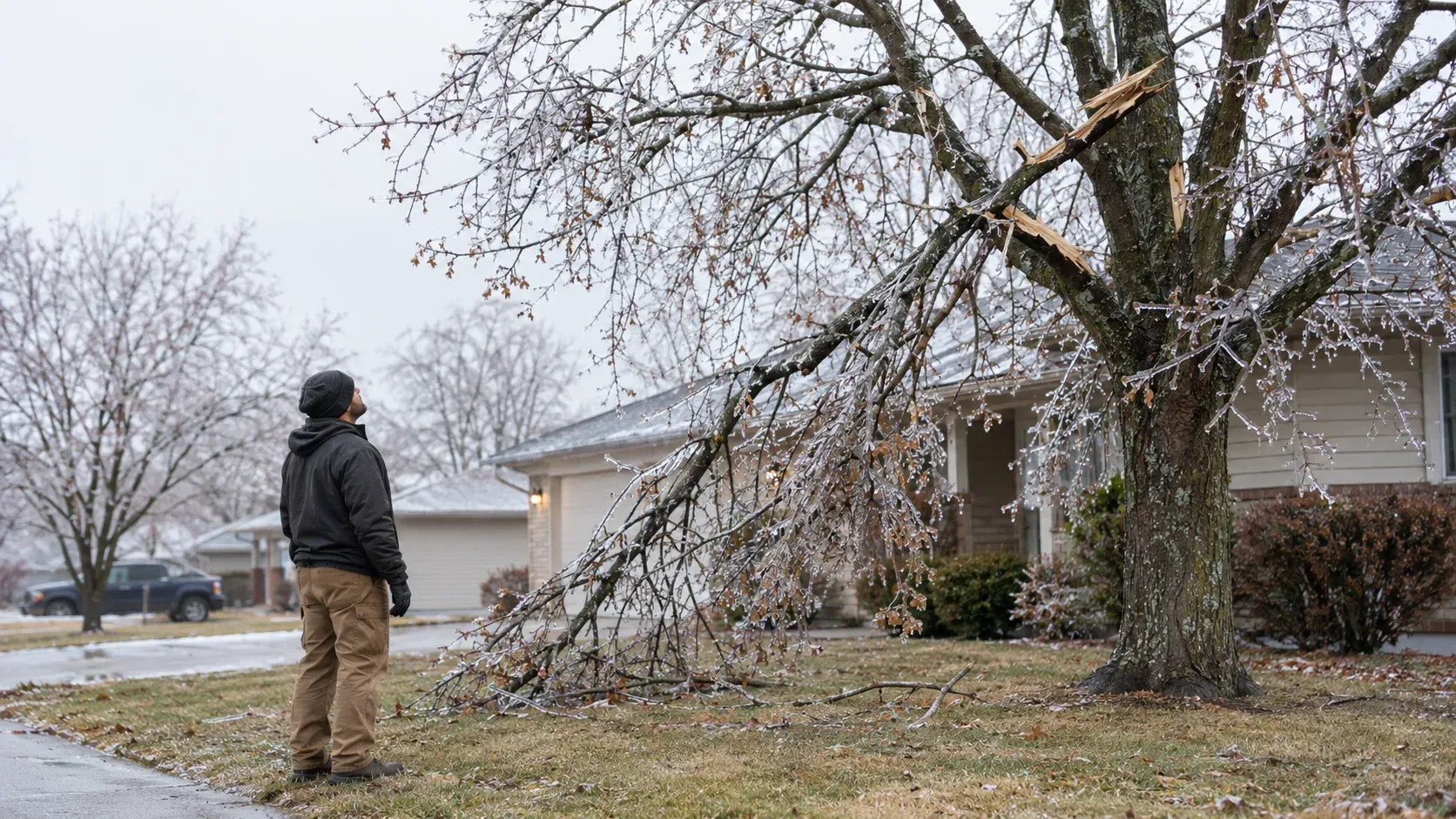
It also helps when access is limited. If there is no clear area to drop sections, lifting them out over a house or fence may be the safer path. Damaged or storm-affected trees that are unstable can also be candidates, since climbing a compromised tree carries its own risks.
How the Process Works Step by Step
Every job is different, but crane-assisted removals generally follow a similar sequence. Knowing the basic flow makes the service easier to picture.
Assessment and Planning. The work starts with a close look at the tree, the site, and the surroundings. The crew considers the tree's size and condition, where the crane can safely set up, and what is around it, such as buildings, wires, and landscaping. Planning also covers where lifted sections will be placed and how the crane will reach over any obstacles. This stage shapes everything that follows.
Positioning the Crane. The crane is set up on stable ground within reach of the tree. Finding a solid, level spot matters, because the crane needs a secure base to lift heavy loads safely.
Cutting and Lifting in Sections. A climber or operator attaches a section of the tree to the crane before making the cut. Once the piece is secured and cut free, the crane lifts it clear of the tree and lowers it to a designated area. This repeats from the top down, section by section, until the tree is removed. Working in controlled pieces is what allows tree removal near homes to happen with less risk to the property.
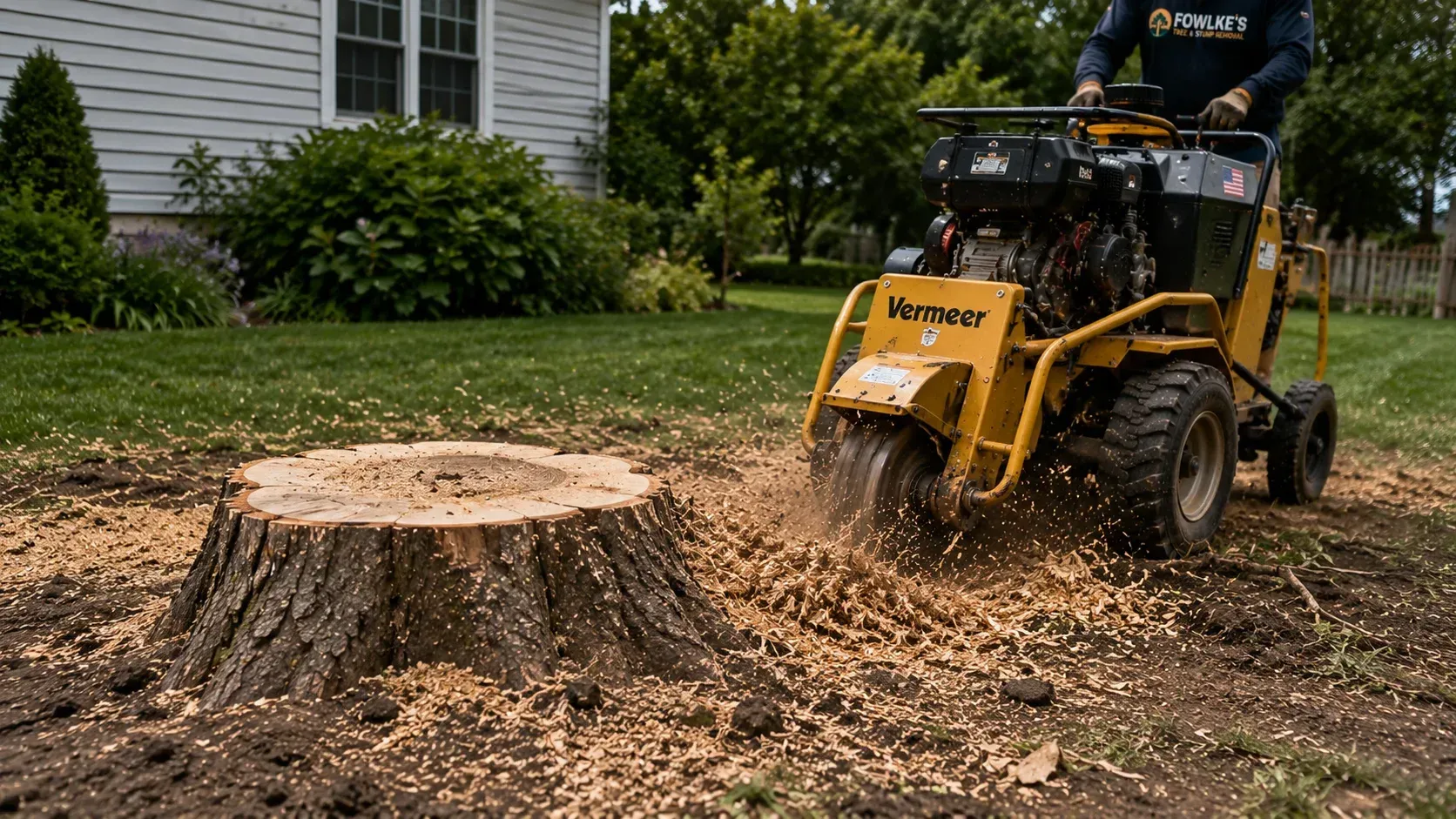
Ground Cleanup. As sections come down, the ground crew processes them, cutting them smaller and clearing debris. What happens to the stump is usually handled separately, since stump grinding is typically its own service rather than part of the removal itself.
Why This Method Suits Large and Hazardous Trees
Large trees carry a lot of weight, and that weight is the main challenge. When a heavy limb falls even a short distance, the force involved can cause real damage. Holding that weight with a crane removes much of that uncontrolled drop.
For hazardous trees, the benefit is about reducing exposure. A dead or storm-damaged tree can be unstable, and climbing it or working directly beneath it is riskier. A crane can allow more of the cutting to happen without a person relying on the tree's own strength.
This is a big part of why large tree removal in tight or sensitive settings often leans on specialized equipment rather than muscle and rope alone.
Protecting Nearby Structures and Landscaping
One of the practical reasons for using a crane is protecting what is around the tree. In a typical yard, a tree may be close to a house, garage, deck, fence, garden beds, or a neighbor's property.
By lifting sections up and out rather than dropping them, the crew can move heavy wood over these features instead of through them. This can lower the chance of damage to roofs, siding, or plantings during the removal.
It does not remove all risk, and no method is completely without it. The goal is to keep large, heavy pieces under control from the moment they are cut until they reach the ground.
What Homeowners Can Expect During the Service
Crane-assisted jobs usually involve more setup than a standard removal. There is equipment to position, space to clear, and planning to carry out before any cutting begins.
You can expect the crew to need room for the crane and a place to stage the wood as it comes down. In some cases, this may briefly affect access to a driveway or part of the yard while work is underway.
The work itself can move steadily once setup is done, since each section follows the same cut-and-lift pattern. Asking the crew to walk you through their plan beforehand is a reasonable way to understand how your specific property will be handled.
Limitations and Things to Consider
A crane is a tool, not a fix for every situation. It needs stable ground and enough clearance to operate, and some sites simply do not allow safe crane placement.
Overhead obstacles matter too. Power lines and other structures can limit where and how a crane can work, and those constraints are part of the planning.
Because of the added equipment and labor, this approach is generally reserved for jobs where it genuinely improves safety or access. For a smaller tree in an open area, a simpler method is often the more sensible choice. The right call depends on the specific tree and site, which is why an on-site assessment matters.
Have a Large Tree You Are Not Sure How to Handle?
If you have a big or hazardous tree near your home and you are wondering whether a crane-assisted approach makes sense, it can help to talk through the details with someone first. You are welcome to contact us to ask questions or set up an assessment of your property. There is no pressure and no obligation, just clear information to help you decide what fits your situation.
Conclusion
Crane-assisted tree removal works by securing and lifting cut sections of a tree with a crane, keeping heavy wood under control rather than dropping it. It is best suited to large, hazardous, or awkwardly placed trees where a standard removal would put nearby structures and landscaping at greater risk.
The method takes more setup and is not right for every job, but in the situations that call for it, the added control can make a difficult removal safer to carry out. Understanding when and why it is used puts you in a better position to make an informed decision about a large tree on your property.
Frequently Asked Questions
What is crane-assisted tree removal?
It is a method where a crane holds and lifts sections of a tree as they are cut, then moves them to a safe spot instead of dropping them. It is commonly used for large or hard-to-reach trees.
When is a crane necessary for tree removal?
A crane is typically considered for very large trees, unstable or damaged trees, or trees surrounded by structures with little room to work. Many smaller or well-placed trees do not require one.
Is crane-assisted removal safer than standard removal?
For certain trees, it can reduce specific risks by keeping heavy sections under control and limiting the need to climb a compromised tree. Whether it is the safer option depends on the individual tree and site.
Does using a crane damage my yard?
The crane needs stable ground to set up, and there may be temporary effects on the area where it sits. A crew will usually plan placement to limit disruption, though some impact on the setup area is possible.
Is the stump removed as part of crane-assisted removal?
Usually not. Stump grinding or removal is generally a separate service, so it helps to ask about it when discussing the job if you want the stump addressed.
Can a crane be used on any property?
Not always. The site needs stable, level ground and enough overhead and surrounding clearance for the crane to operate safely, and some locations do not allow that.
How do I know if my tree needs a crane?
This is best determined by a professional assessment. Someone can evaluate the tree's size, condition, and surroundings to recommend the most suitable removal method.
Related Posts