Should You Grind or Fully Remove a Tree Stump in Cedar Falls, Iowa?
Key Takeaways
- There is no single right answer, since grinding and full removal each suit different situations.
- Stump grinding chews the stump down below ground level but leaves the roots in place, so it is usually faster and less disruptive.
- Full removal takes out the stump and much of the root system, which is more involved and harder on the surrounding soil.
- Your future plans for the spot, such as replanting or building, often decide which option makes sense.
- A close look at the stump, its size, and its location helps you make the better choice for your property.
Introduction
Whether you should grind or fully remove a tree stump depends on what you plan to do with the space, since neither option is automatically the right one. Grinding is usually the simpler, less disruptive choice, while full removal makes more sense when you need the roots gone for replanting, construction, or other ground work.
This matters to Cedar Falls homeowners because a leftover stump can affect how a yard looks, how safe it is to walk through, and what you can do with that part of the property later. Understanding the difference helps you avoid paying for more than you need or ending up with a result that does not fit your plans. Our team offers tree service in Cedar Falls and the surrounding area, and this is one of the more common questions people ask after a tree comes down.
The Short Answer: It Depends on Your Plans
The choice between grinding and full removal is less about which is better overall and more about which fits your situation. Both leave you without a visible stump, but they handle the roots very differently.
Grinding deals with the part of the stump you can see and a bit below the surface. Full removal goes after the stump and a large share of the root system underground.
If you just want the stump gone from view and are not planning major ground work there, grinding often covers it. If you need clear, workable soil for something specific, full removal may be worth the extra effort.
What Stump Grinding Actually Does
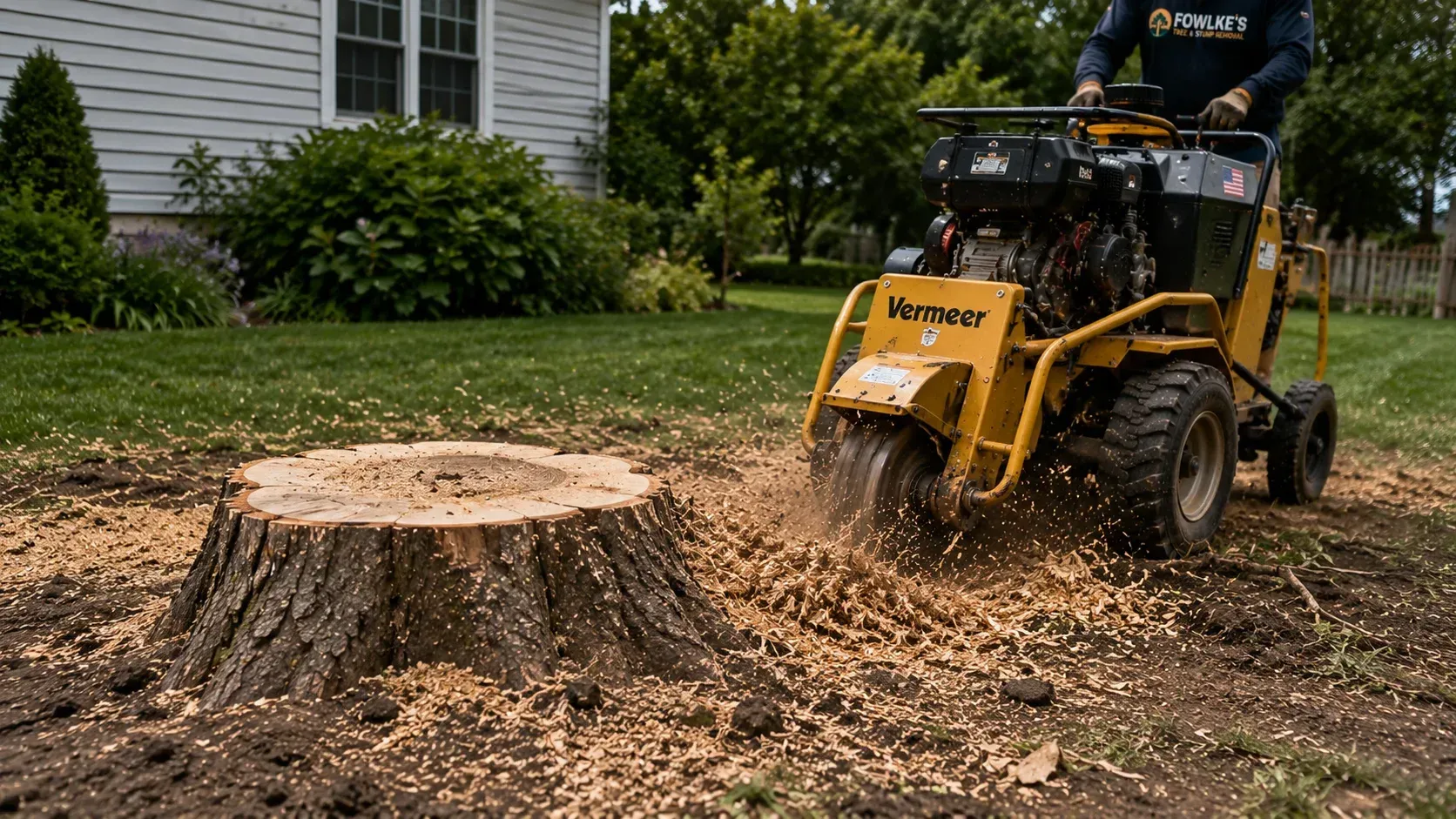
Stump grinding uses a machine with a rotating cutting wheel to grind the stump down into wood chips. The crew works the stump below ground level, typically several inches down, until it is no longer visible.
What stays behind is the root system. The roots are left in the soil, where they break down slowly over time. For most yards, this is not a problem, especially if you are planning to put grass or mulch over the spot.
Because it is a focused job that mostly disturbs the stump itself, stump grinding tends to be quicker and gentler on the surrounding yard than digging everything out.
What You Are Left With. After grinding, you usually have a pile of wood chips and a shallow depression where the stump was. The chips can often be used as mulch or removed, and the low spot can be filled with soil. The roots stay underground and decay over the following years. In rare cases, some tree types may send up new shoots from remaining roots, which can be managed if it happens.
What Full Stump Removal Involves
Full stump removal takes out the entire stump along with much of the root system. This usually means digging around and under the stump to lift it free, which disturbs a much larger area of the yard.
Because it reaches deep and wide, this method leaves a sizable hole. That space then needs to be filled and leveled, which is part of the job to consider.
The upside is that little to nothing is left behind underground. For situations where roots would get in the way, that clean result can be worth the added disruption.
When the Roots Really Need to Go. There are cases where leaving roots is not ideal. If you plan to build a structure, pour concrete, or install something that needs undisturbed ground, remaining roots can interfere. Replanting a new tree in the exact same spot is another example, since old roots and the new planting can compete for space. In these situations, removing the roots gives you a cleaner starting point.
Comparing the Two Options
The clearest way to think about it is trade-offs. Grinding is faster, less invasive, and leaves the yard mostly intact, but the roots remain underground.
Full removal clears the roots and gives you open ground, but it is more labor-intensive, disturbs more of the yard, and leaves a larger area to restore.
Neither is a shortcut version of the other. They solve slightly different problems, so the better fit depends on what you need from the space once the work is done. Both are steps that often come after tree removal, once the tree itself is already down.
How Your Landscaping Plans Affect the Choice
Your plans for the area often make the decision for you. If the goal is simply a clean, level lawn, grinding usually gets you there with less fuss.
If you are reshaping the yard, adding a patio or shed, or planting something new in the same footprint, the roots become a bigger factor. In those cases, full removal may line up better with the end result you want.
It also helps to think ahead. A stump you grind today is harder to fully remove later, since the visible reference point is gone. If you are unsure about future projects, it is worth weighing that before deciding.
Costs, Cleanup, and Effort
The two options differ in how much work they take, and that difference tends to show up in cost. Grinding is generally the less involved of the two, since it targets the stump rather than the whole root system.
Full removal takes more time, more digging, and more cleanup, which usually makes it the larger job. The size of the stump and how accessible it is also affect the effort either way.
Cleanup differs too. Grinding leaves wood chips and a shallow dip to fill, while full removal leaves a bigger hole that needs soil and leveling. Neither is complicated to finish, but they are not identical in what they leave behind.
Which Option Fits Common Situations
A few everyday scenarios show how the choice plays out. For a stump in the middle of a lawn that you just want gone from sight, grinding is often the practical pick.
For a stump where you plan to build, pave, or replant in the same spot, full removal usually fits better because the roots would otherwise be in the way.
For large or awkwardly placed stumps, the right method depends on the specifics, and a professional look can help you decide. Every yard is a little different, so the best choice comes down to your stump, your soil, and your plans.
Conclusion
Deciding whether to grind or fully remove a stump comes down to what you want from that part of your yard. Grinding is the quicker, less disruptive option that leaves roots behind, while full removal clears the roots at the cost of more digging and a larger area to restore.
Neither is the correct answer in every case, so the right call depends on your appearance goals, safety concerns, and future landscaping plans. Weighing those factors against the trade-offs of each method puts you in a good position to make a decision you will be comfortable with.
Not Sure Which Option Makes Sense for Your Yard?
If you have a stump and you are going back and forth between grinding and full removal, it can help to talk through the details with someone who can see the site. You are welcome to contact us to ask questions or arrange a look at your property. There is no pressure and no obligation, just clear information to help you choose what fits your plans.
Frequently Asked Questions
What is the main difference between stump grinding and full removal?
Grinding chews the stump down below ground level but leaves the roots in the soil. Full removal takes out the stump and much of the root system, which disturbs more of the yard.
Does grinding get rid of the roots?
No. Grinding deals with the stump itself and a few inches below the surface, while the roots stay underground and break down slowly over time.
Will roots left after grinding cause problems?
For most lawns, leftover roots are not an issue and simply decay over the years. They can matter more if you plan to build or replant in the same spot.
Can I plant a new tree where a stump was ground?
It can be harder to plant in the exact same spot because old roots may still be present. Planting nearby or choosing full removal can give a new tree more room.
Which option is less expensive?
Grinding is generally the less involved job, so it often costs less than full removal. The stump's size and location affect the effort either way, so an estimate reflects the specific situation.
How big is the mess after each method?
Grinding leaves wood chips and a shallow depression to fill. Full removal leaves a larger hole that needs soil and leveling once the stump is out.
How do I decide which one is right for me?
Think about what you want to do with the space. If you just want the stump gone from view, grinding often works, and if you need clear ground for a project, full removal may fit better. A professional can help you weigh the options.
Related Posts