Stump Grinding vs. Tree Removal: Which Is Right for Your Property?
Table of Contents
- Introduction
- What Is Tree Removal?
- When Should You Choose Tree Removal?
- What Is Stump Grinding?
- When Should You Choose Stump Grinding?
- Stump Grinding vs. Tree Removal: What's the Difference?
- Which Option Is Best for Your Property?
- Why Professional Tree Services Matter
- What Happens After Tree Removal?
- Conclusion
- Frequently Asked Questions
Key Takeaways
- Tree removal is used when the tree itself needs to be taken down because of safety, health, access, or property concerns.
- Stump grinding addresses the stump left behind after a tree has been removed.
- Grinding is generally less invasive than excavating an entire stump and root ball.
- The right option depends on whether the tree is still standing, your future plans for the property, and how much of the root system needs to be removed.
- In many cases, tree removal followed by stump grinding provides the cleanest result for the property.
Introduction
When a tree becomes hazardous, interferes with construction, or no longer belongs in your landscape plans, removing it may be the right decision. But tree removal and stump grinding solve different problems. Tree removal takes down the tree itself, while stump grinding addresses what remains after the tree has been cut down.
Understanding the difference can help you decide what your property actually needs, whether you are dealing with a dangerous tree, an unwanted stump, or planning to reclaim an area for landscaping.
What Is Tree Removal?
Tree removal is the process of safely taking down a standing tree and removing the resulting branches, trunk sections, and debris from the property.
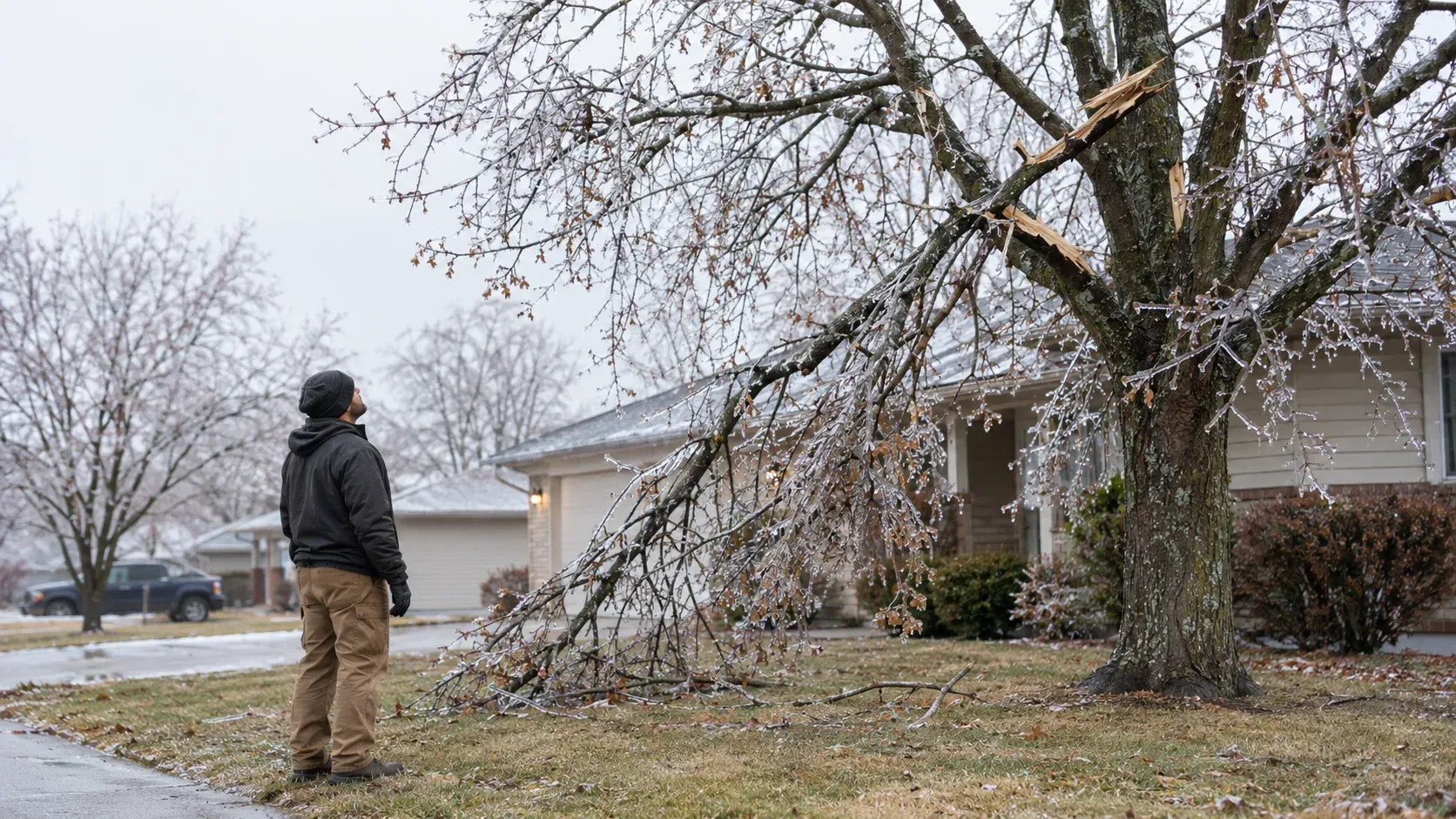
It may be necessary when a tree is dead, diseased, structurally compromised, dangerously positioned, or interfering with construction and landscaping plans. Professional tree removal services can also be appropriate when a tree has become too large for its location or presents a potential hazard to a home, driveway, utility line, or other structure.
How Tree Removal Works
The exact process depends on the tree's size, condition, location, and surroundings. A typical removal may involve:
- Assessing the tree and surrounding property. The crew evaluates the tree, nearby structures, access points, and potential hazards.
- Planning the removal. The safest removal method is selected based on the site's conditions.
- Removing branches and sections of the tree. Larger trees may be dismantled in sections rather than felled in one piece.
- Removing the resulting debris. Branches, trunk sections, and other material are handled as part of the cleanup process.
After the tree has been removed, the stump may remain in the ground. That is where stump grinding becomes relevant.
When Should You Choose Tree Removal?
Tree removal may be the appropriate choice when the problem is the standing tree itself.
Consider professional tree removal if:
- The tree is dead or severely declining.
- The trunk is damaged, cracked, or unstable.
- Large dead branches create a safety concern.
- The tree is growing too close to a structure.
- Roots are interfering with important areas of the property.
- The tree is blocking planned construction or landscaping.
- The tree has become too large or poorly positioned for the space.
A dying or structurally compromised tree should not simply be ignored. Understanding the warning signs of a dangerous or dying tree can help you recognize when professional assessment may be necessary.
What Is Stump Grinding?
Stump grinding is performed after a tree has been cut down and a stump remains.
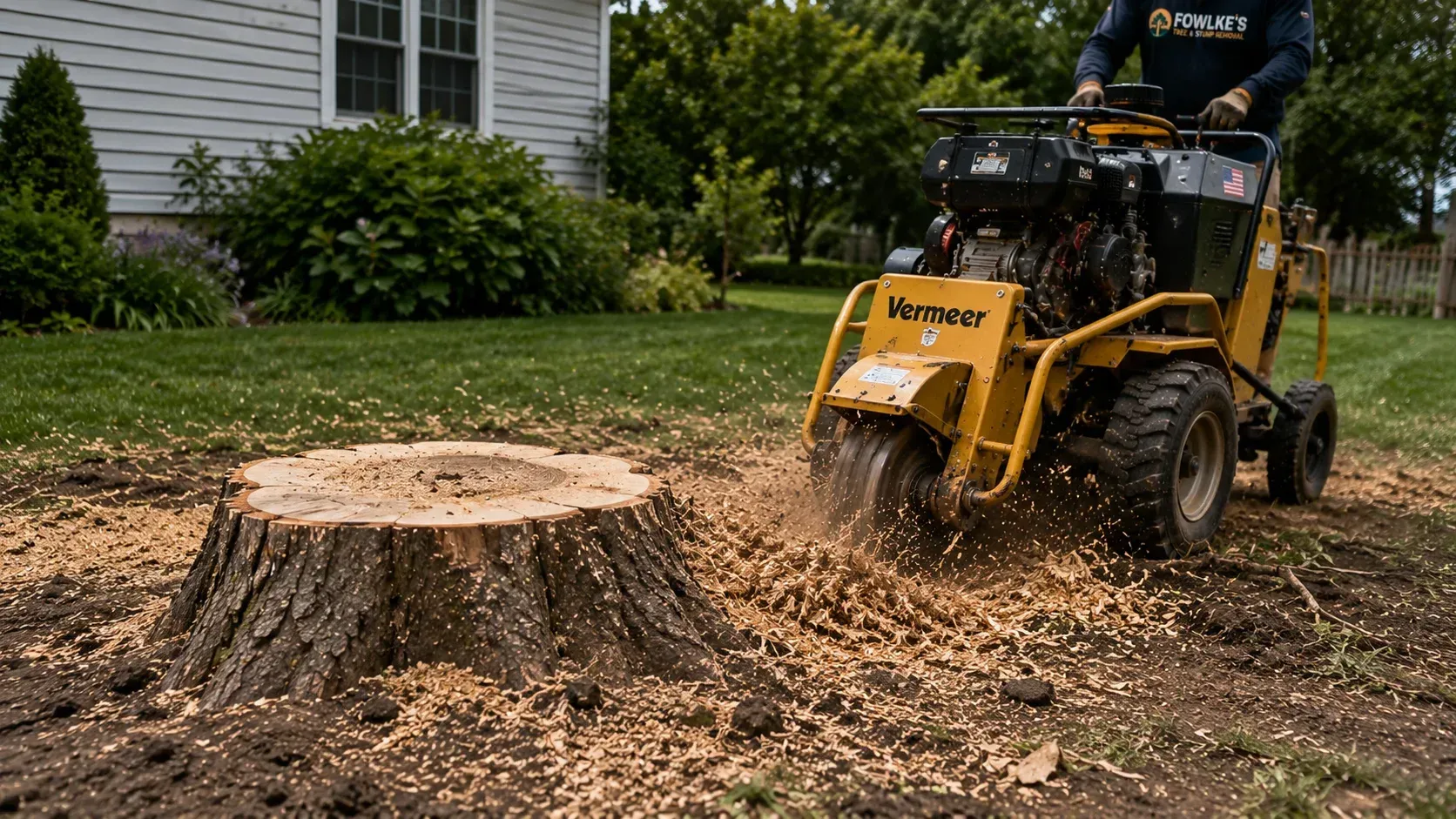
Instead of excavating the entire stump and root ball, a specialized stump grinder cuts the remaining stump into wood chips. The equipment can grind the stump below ground level, leaving the area easier to restore or incorporate into the surrounding landscape.
Fowlkes Tree and Stump Removal's stump grinding services are designed to remove unwanted stumps while minimizing disruption to the surrounding yard.
How Stump Grinding Works
The process generally involves:
- Assessing the stump and surrounding area.
- Positioning specialized grinding equipment.
- Grinding the stump below ground level.
- Breaking the remaining wood into chips.
- Cleaning the area so it can be prepared for future lawn or landscaping work.
Stump grinding does not mean the entire root system is excavated. Some roots remain underground and naturally decay over time.
When Should You Choose Stump Grinding?
Stump grinding makes sense when the tree has already been removed but the remaining stump is causing a problem.
You may want to grind a stump if:
- It creates a tripping hazard.
- It makes mowing difficult.
- It takes up valuable lawn space.
- It interferes with landscaping.
- You want a cleaner-looking yard.
- You plan to reseed or restore the area.
- You do not need the entire root ball excavated.
An old stump can also create problems beyond appearance. Hidden stump hazards can include tripping risks, lawn maintenance problems, and conditions that attract pests.
Stump Grinding vs. Tree Removal: What's the Difference?
The simplest way to look at it is this:
Tree removal deals with the standing tree. Stump grinding deals with the stump left after the tree is removed.
| Tree Removal | Stump Grinding | |
|---|---|---|
| Main purpose | Remove a standing tree | Remove the remaining stump |
| When it is performed | While the tree is still standing | After the tree has been cut down |
| Root system | Generally remains unless separately excavated | Major stump material is ground below ground level |
| Main benefit | Removes a hazardous or unwanted tree | Clears an unwanted stump |
| Yard disturbance | Depends on tree size and removal method | Generally less invasive than stump excavation |
| Future landscaping | May require additional stump work | Leaves the area easier to restore |
These services are not necessarily alternatives. They often work together.
If a hazardous tree needs to come down, tree removal addresses the immediate problem. Once the tree is gone, stump grinding can remove the remaining stump and make the area easier to use.
Which Option Is Best for Your Property?
The right service depends on what is currently on your property and what you plan to do with the space.
If the tree is still standing
If the tree itself is the problem, stump grinding cannot solve it. The standing tree must be evaluated and, when necessary, safely removed.
If the tree is already gone
If you are left with an unwanted stump, stump grinding may be all you need.
If you are planning construction
Your future plans matter. Building, paving, or major landscaping may require more extensive removal of the stump and root system than a standard grinding project.
If you want to improve your lawn
Stump grinding can make it easier to reclaim an area for grass or landscaping. Once the stump is ground down and the area is properly prepared, you have more flexibility for restoring the space.
If you are concerned about safety
A stump that sticks up from the ground can create a trip hazard and interfere with lawn equipment. Grinding it down can make the area safer and easier to maintain.
Why Professional Tree Services Matter
Tree removal and stump grinding involve heavy equipment, cutting tools, and potentially hazardous conditions. The risks increase when trees are close to homes, vehicles, utility lines, fences, or other structures.
Professional service can help reduce those risks through proper assessment, equipment, planning, and removal techniques.
Fowlkes Tree and Stump Removal provides tree removal and stump grinding services for properties in Independence, Hiawatha, Cedar Falls, and surrounding areas. The company also handles challenging tree removals where access, tree size, or nearby structures require additional planning.
For homeowners preparing for a removal appointment, taking a few simple steps to prepare your yard for tree removal can help create safer and easier access for the crew.
What Happens After Tree Removal?
Once the tree has been removed, you still need to decide what should happen to the remaining stump.
If you leave it in place, the stump can remain an obstacle for mowing, landscaping, and other property improvements. Depending on the tree and its condition, it may also decay over time or produce unwanted growth.
If you choose stump grinding, the stump is ground below the surrounding soil level. The resulting area can then be cleaned, leveled, and prepared for future use.
Your next step could be:
- Reseeding the lawn
- Installing sod
- Planting landscaping
- Expanding an existing lawn area
- Preparing for another outdoor project
The best approach depends on what you ultimately want to do with the space.
Conclusion
Stump grinding and tree removal are different services designed to address different stages of a tree problem.
If a standing tree is dead, hazardous, unstable, or interfering with your property plans, professional tree removal may be necessary. If the tree has already been removed and you are left with an unwanted stump, stump grinding can clear the remaining obstruction without the larger excavation involved in full stump extraction.
For many properties, the two services work together. Removing the tree addresses the immediate concern, while grinding the stump helps leave the property cleaner, safer, and easier to maintain.
Need Help Deciding Between Tree Removal and Stump Grinding?
If you are not sure which service your property needs, Fowlkes Tree and Stump Removal can evaluate the situation and help you determine the appropriate next step.
Contact Fowlkes Tree and Stump Removal to discuss your tree or stump, request a consultation, or call
(319) 327-1199.
Frequently Asked Questions
1. Is stump grinding the same as tree removal?
No. Tree removal takes down a standing tree, while stump grinding removes the stump left behind after a tree has been cut down.
2. Should I remove the tree or just grind the stump?
If the tree is still standing and presents a safety, health, or property concern, it may need to be removed first. If the tree is already gone and only the stump remains, stump grinding may be sufficient.
3. Does stump grinding remove the tree's entire root system?
No. Stump grinding removes the stump and can grind significant portions of accessible root material, but it does not typically excavate the entire root system. Remaining roots can decay underground over time.
4. Can I plant grass after stump grinding?
Yes. After the grinding area has been cleaned, leveled, and prepared with suitable soil, it can be restored with grass seed or sod. The specific restoration process depends on the condition of the area and your landscaping plans.
5. Can tree removal and stump grinding be done as part of the same project?
Yes. These services are often performed as part of the same property improvement project. The tree is removed first, and the remaining stump can then be ground to clear the area for future lawn or landscaping work.
Related Posts